

In Missouri’s young, fully legal sports betting market, bettors wagered hundreds of millions of dollars during its first months — but the state saw a second consecutive dip in reported revenue as promotional costs and deductions continued to outweigh sportsbook earnings.
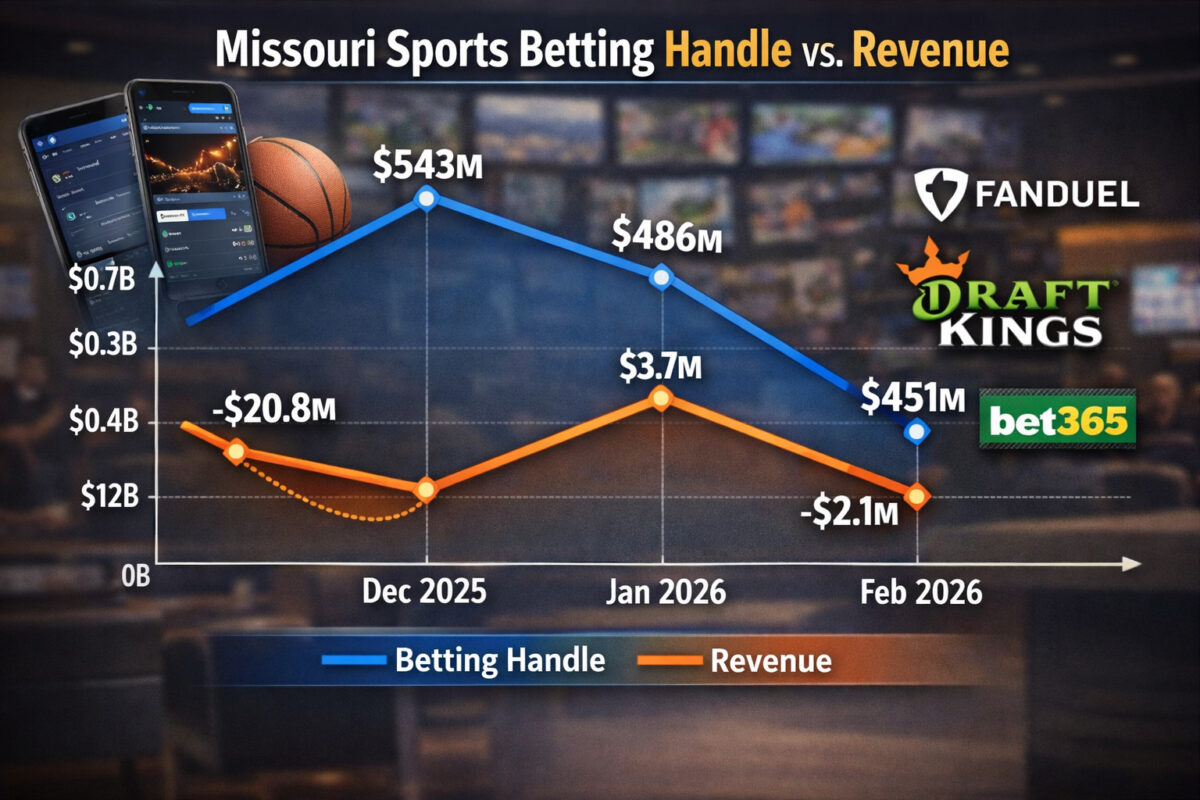
Missouri’s sports betting launch — which kicked off on December 1, 2025 — looked impressive at first glance, with more than $543 million in handle (total wagers) in the inaugural month. However, adjusted gross revenue — the actual earnings sportsbooks keep after payouts and deductions — slid into the red due to heavy promotional spending, leaving minimal taxable revenue for the state. The latest monthly figures show a continued slowdown in revenue growth, illustrating early market challenges rather than long-term underperformance.
Missouri’s first full month of legal sports wagering recorded a $543 million betting handle, with nearly all action coming from mobile sportsbooks. Yet after payouts, voided bets, and huge promotional deductions from operators, the state reported negative adjusted gross revenue of about −$20.8 million in December. This means sportsbooks collectively lost money once free bets and credits were factored in.
Operators used aggressive bonuses to attract new customers — a common early-market tactic — but Missouri’s tax rules allow sportsbooks to deduct the cost of promotions from taxable revenue. Free plays and bonus credits in December exceeded $125 million, effectively erasing taxable revenue and leaving the state with just $521,000 in tax receipts.
According to recent reporting, Missouri’s sports betting revenue slipped for a second consecutive month, with weekly declines in adjusted revenue compared with the post-launch peak. This softening highlights how early promotional strategies and seasonal betting patterns can mask underlying growth — including a possible fallback after the NFL end and before major spring sports.
Nearly all bets in Missouri are placed via mobile apps; retail sportsbooks account for less than 1 % of total wagers. This mirrors patterns in other new and established markets but concentrates revenue risk in digital operators whose promotional strategies vary widely.
Missouri’s experience echoes early launches in other states where heavy bonuses suppress early revenue. Analysts suggest that once promotional spending normalizes, adjusted revenue — and tax income — will grow, making Missouri’s initial dips a startup effect rather than a structural problem.
It’s still early. With only a few months of data, analysts caution that seasonal sports cycles (NFL vs NBA/MLB shifts) and one-off launch incentives distort the revenue picture. Future months — especially during football season — could reverse current trends.
Missouri’s sports betting numbers reveal a common launch-phase paradox: massive wagering interest but minimal state revenue due to promotional deductions. For bettors and policymakers alike, the early trends underscore that handle and revenue aren’t the same thing — and that meaningful fiscal impact may still be months away.