Gambling is prohibited for underage individuals | Commercial content | Regional restrictions may apply | T&Cs apply | Play responsibly
Polymarket Review (2026): Is It Legit, Legal, Safe, and Worth Using?
$10 Free Trade Credit (no deposit required)
The offer is available to new users aged 18+ (21+ in some states) who register and are approved through the Polymarket waitlist. Eligibility depends on jurisdiction and regulatory approval. Some states may restrict access (e.g., NY and NV reported limitations). Users must comply with applicable U.S. laws and platform terms.
The offer is available to new users aged 18+ (21+ in some states) who register and are approved through the Polymarket waitlist. Eligibility depends on jurisdiction and regulatory approval. Some states may restrict access (e.g., NY and NV reported limitations). Users must comply with applicable U.S. laws and platform terms.
This Polymarket review looks at one of the fastest-growing prediction markets online. Instead of placing traditional sportsbook bets, users trade contracts on real-world events such as elections, sports outcomes, crypto prices, and breaking news.
After completing our registration on the site, our investigations showed that Polymarket feels closer to a trading platform than a betting app. Prices move between $0 and $1, reflecting the crowd’s probability of an event happening.
Polymarket is best suited to users who follow news closely and enjoy reacting to new information quickly. It is less ideal for beginners who want a simple fiat betting experience without wallets or event-contract trading.
The offer is available to new users aged 18+ (21+ in some states) who register and are approved through the Polymarket waitlist. Eligibility depends on jurisdiction and regulatory approval. Some states may restrict access (e.g., NY and NV reported limitations). Users must comply with applicable U.S. laws and platform terms.
Quick Verdict
Best For
Not Ideal For
Active news-followers and event traders
Users who want simple sportsbook-style betting
Crypto-comfortable traders
People unfamiliar with wallets or USDC
Political and macro-event speculation
Casual bettors who only want sports
Users who enjoy trading probabilities
Beginners looking for fixed odds
Biggest strengths
Huge range of event markets
Live pricing that reacts to breaking news
Ability to buy and sell positions before settlement
Biggest drawbacks
Wallet onboarding can feel technical for beginners
Some user complaints around support and disputes
Not designed for simple sportsbook-style betting
What Is Polymarket?
Polymarket is a prediction market where users trade contracts on future events. Most markets are simple Yes/No questions, and prices usually sit between $0.01 and $0.99. If a Yes share is trading at $0.40, the market is pricing that outcome at roughly 40%.
This is not a sportsbook. You are trading against other users on an order book, usually using USDC, and winning shares settle at $1 while losing shares settle at $0. You can also sell before settlement if the market moves in your favor.
Type
How it works
Best for
Prediction market
Trade Yes/No contracts against other users
Event traders, news-followers
Sportsbook
Bet fixed odds against the house
Traditional bettors
Exchange
Back and lay against other users
Odds-focused traders
How Polymarket Works for Beginners
The easiest way to understand Polymarket is with one example. Say you buy Yes at $0.40 on a market asking whether a team will win. If the event happens, that share settles at $1, so your profit is $0.60 per share before any friction. If the price rises before settlement, you can also sell early and lock in a smaller profit.
That is why Polymarket works for beginners once the basic idea clicks. Price equals probability, and the trade does not need to stay open until the end. From our testing, that makes the platform feel more flexible than a normal betting app.
Action
Price
Outcome
Profit / Loss
Buy Yes
$0.40
Event happens
+$0.60
Buy Yes
$0.40
Event fails
-$0.40
Sell early after move to $0.55
$0.40 in, $0.55 out
Exit before settlement
+$0.15
Polymarket Markets: What Can You Trade On?
The strength of Polymarket markets is the range. The platform covers politics, sports, crypto, economy, business, tech, culture, and breaking-news events. Some markets settle in minutes, while others can stay open for weeks or months.
That breadth is a big reason people use it. News-followers can jump into politics and macro stories, sports fans can trade futures and game outcomes, and crypto users can trade much shorter time-frame markets.
Category
Example market
Typical settlement speed
Best for
Politics
Elections, cabinet picks
Days to months
News-followers
Sports
Game outcomes, futures
Hours to months
Sports traders
Crypto
15-minute, hourly, daily moves
Minutes to days
Fast-moving traders
Economy
Fed, inflation, macro events
Days to months
Macro-focused users
Culture / Tech
Awards, app rankings, launches
Days to weeks
Trend watchers
Is Polymarket Legit and Safe?
On legitimacy, the answer is yes, with caveats. Polymarket has a U.S. regulated pathway, a large live market ecosystem, and strong iPhone adoption signals. Those are real positives and they give the platform more credibility than a random offshore-style product.
On safety, it is more mixed. The platform itself is real, but user risk still depends on wallet handling, reading market rules, and understanding how settlement works. There are also public complaints around support, withdrawals, and disputed outcomes, so this is not a platform to describe as flawless.
The offer is available to new users aged 18+ (21+ in some states) who register and are approved through the Polymarket waitlist. Eligibility depends on jurisdiction and regulatory approval. Some states may restrict access (e.g., NY and NV reported limitations). Users must comply with applicable U.S. laws and platform terms.
That is the balanced takeaway from our testing. If you are comfortable with wallets and careful with the rules, Polymarket feels much safer. If you want a simple fiat app with lots of hand-holding, it is a rougher fit.
Safety positives
Safety concerns
What users should do
Regulated U.S. pathway
Support complaints
Start small
Large live market ecosystem
Dispute / settlement complaints
Read market rules carefully
Strong iOS adoption signals
Wallet and funding complexity
Double-check deposits and exits
Is Polymarket Legal in the U.S.? Legal States and Availability
Polymarket legal status in the U.S. is clearer than it used to be, but it still needs careful wording. Polymarket previously stepped back from the U.S. after regulatory action. Now, Polymarket US operates through QCX LLC d/b/a Polymarket US under a regulated U.S. pathway.
That does not mean you should assume blanket access everywhere. Availability can depend on your physical location, the specific U.S. venue, and your compliance status. The safest advice is simple: check current onboarding and geographic rules before depositing.
Access topic
What we know
What users should verify before signing up
U.S. pathway
Polymarket US uses a regulated U.S. route
That you are using the correct U.S. venue
Availability
U.S. access is live again
Current onboarding rules
Geography
Permissions can depend on physical location
Whether your current location is permitted
Compliance
Access may depend on account checks
KYC and account eligibility
Polymarket Fees, Spreads, Slippage, Deposits, and Withdrawals
This is where a lot of review pages get lazy. Polymarket fees on paper are fairly light. Most markets are fee-free, but some markets now have taker fees.
The more important point is that real cost is not just the posted fee. It also comes from spread, slippage, network choice, and payment rails. Deposits and withdrawals may look free on Polymarket’s side, but outside providers or chains can still add friction. That is why two users can make the same trade and still end up with different all-in costs.
Cost type
Charged by Polymarket?
When it applies
User tip
Trading fee
Usually no
Most standard markets
Check the market rules first
Taker fee
Sometimes
Certain fee-enabled markets
Be extra careful on shorter-term markets
Deposit fee
Not always on-platform
Depends on method or rail
Check the funding route before sending
Withdrawal fee
No on Polymarket’s side
On withdrawal
External chain or provider costs may still apply
Spread / slippage
Indirectly, yes
Thin or fast-moving markets
Use smaller size in lower-liquidity markets
Polymarket App Review: iPhone, Android, Ratings, and Mobile Experience
The Polymarket mobile app story is not the same across devices, and that is worth calling out. On the U.S. App Store, Polymarket shows 4.7/5 from 30K ratings. On Google Play, the app shows 2.5 stars, 7.08K reviews, and 100K+ downloads.
That split tells you something useful. iPhone users seem much happier overall, while Android feedback looks more mixed. From our review angle, that makes this less of a blanket “great app” story and more of a device-specific app review. Users should check recent reviews, update dates, and privacy details before installing rather than relying on one headline score.
Platform
Rating
Review count or downloads
Last update
Notes
iPhone
4.7 / 5
30K ratings
Feb 26, 2026
Strong iOS reception, U.S. trading noted in listing
Android
2.5 / 5
7.08K reviews, 100K+ downloads
Dec 11, 2025
Much weaker rating, still meaningful download volume
Account Setup, Payments, and Getting Started
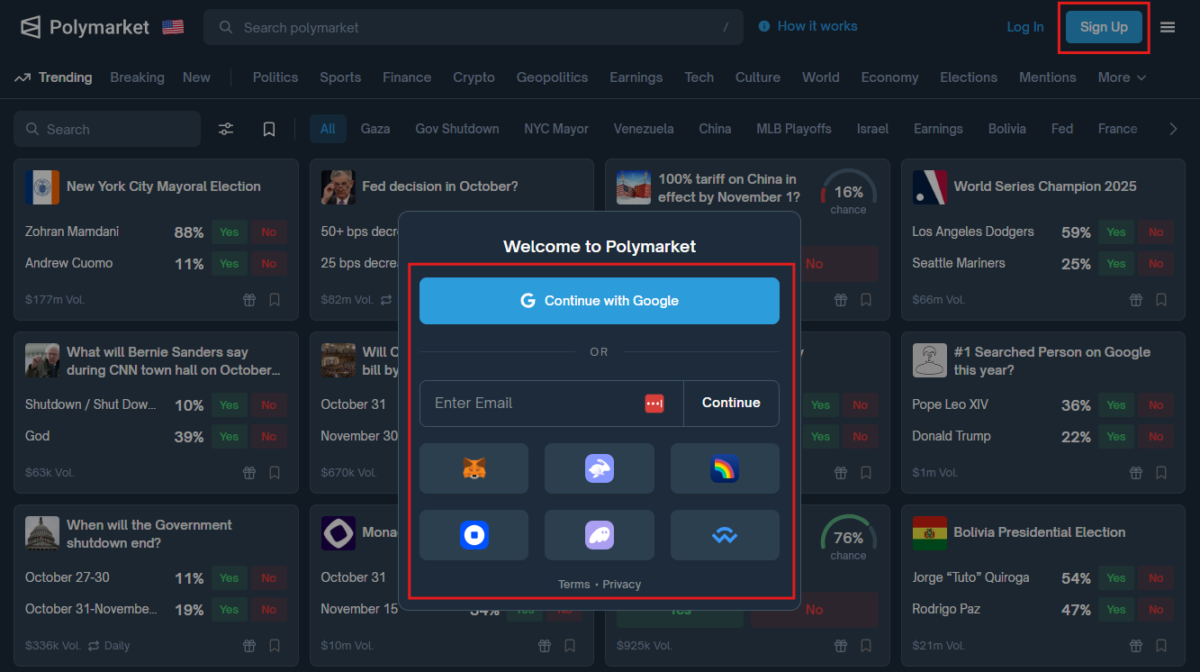
This part is simpler than it sounds, but there is still room to mess it up. Users can sign up with Google, email, or a crypto wallet. For deposits, the main thing is choosing the correct token and network before sending funds.
For payments, the platform supports crypto funding, and Polymarket also references credit/debit card and bank transfer in some onboarding flows. The main beginner point is not the method list, though. It is accuracy. Know which flow you are using, check availability in your location, and never try to bypass restrictions with a VPN.
Setup step
What to do
Common mistake
Fix
Create account
Use Google, email, or wallet
Picking a method you do not understand
Start with the simplest login route
Check availability
Confirm your location is eligible
Assuming residency is all that matters
Check current physical-location rules
Choose deposit method
Select token and network carefully
Sending on the wrong chain
Match the exact token and network
Fund account
Send the minimum required amount
Sending too much too soon
Test with a small transfer first
Start trading
Open a market and buy Yes or No
Treating it like a sportsbook
Read the market rules before buying
Pros and Cons
A fair Polymarket review needs both sides, because this platform does a lot well without being especially beginner-friendly.
Pros
Huge range of markets across politics, sports, crypto, and breaking news
Strong real-time event discovery when major stories break
Ability to buy and sell before settlement
Low headline fees on most markets
Stronger iPhone app signals than many niche trading platforms
Cons
Public complaints around support and disputed outcomes
App experience looks inconsistent across iPhone and Android
Wallet setup and access rules can confuse new users
Real trading friction still exists through spreads and slippage
Not ideal for anyone who just wants simple sportsbook-style betting
Best Prediction Market Strategy for New Users
The best prediction market strategy for new users is not complicated. Start small, read the market rules properly, and treat price as probability rather than certainty. That mindset alone stops a lot of bad trades.
The offer is available to new users aged 18+ (21+ in some states) who register and are approved through the Polymarket waitlist. Eligibility depends on jurisdiction and regulatory approval. Some states may restrict access (e.g., NY and NV reported limitations). Users must comply with applicable U.S. laws and platform terms.
Our main Polymarket beginner guide advice is to stick to liquid markets, avoid chasing late spikes, and sell early when the price moves your way. A smaller, controlled win is usually better than hanging around hoping to squeeze out every last cent.
Strategy tip
Why it matters
Mistake it prevents
Read the market rules first
Settlement details matter
Buying a market you misunderstood
Prefer liquid markets
Easier entries and exits
Getting stuck in thin markets
Start with small size
Limits damage while learning
Overcommitting too early
Treat price as probability
Keeps expectations realistic
Confusing 70% with certainty
Sell early when needed
Helps lock in value
Letting profit disappear late
Polymarket vs Kalshi / PredictIt / Traditional Sportsbooks
This is where the choice gets clearer. Polymarket is the better fit if you want market breadth, fast-moving event contracts, and a platform that feels tied to live news. It is especially strong for users who want more than just sports.
Kalshi is a better fit if you want a more regulated, more structured feel. PredictIt is more limited in scope. A traditional sportsbook is still the easier choice if you only care about sports odds, promos, and a simple betting flow.
Platform
Best for
Funding style
Legal clarity
Market breadth
Ease of use
Polymarket
Event traders, news-followers
Crypto-led
Improving, but still nuanced
Very broad
Moderate
Kalshi
Users wanting a more structured U.S. feel
More traditional
Stronger-feeling for many users
Broad
Moderate
PredictIt
Political-event users
Traditional
Narrower use case
Limited
Moderate
Sportsbook
Sports-only bettors
Fiat
Clearer for most users
Sports only
Easier
Final Verdict: Is Polymarket Worth It in 2026?
Yes, but not for everyone. This Polymarket review comes out positive for users who actively follow news, understand probabilities, and are comfortable with wallets or trading-style platforms.
The biggest risk is not that the platform is fake. It is that beginners can underestimate the friction. Market rules, settlement details, spreads, slippage, and account setup all matter more here than they do on a normal sportsbook.
Our final take is simple. Polymarket is worth using in 2026 for active event traders and crypto-comfortable users. It is much less appealing if you just want a clean, simple sportsbook-style experience with none of the extra moving parts.
Polymarket Review FAQs
Is Polymarket legit?
Yes. Polymarket is a real prediction market where users trade event contracts.
Is Polymarket legal in the U.S.?
Yes, but access can depend on your location and compliance checks.
Is Polymarket safe?
It can be, but users still need to handle wallets carefully and read market rules.
Does Polymarket charge fees?
Most markets are low-fee or fee-free, though some trades include taker fees.
Is Polymarket good for beginners?
It can be, but it suits users who are comfortable with probabilities and trading-style platforms.
Since graduating with an English and Media degree back in Dublin, I took a leap and landed in sunny Barcelona—where I’ve been working as a copywriter ever since, with over 3 years of experience in iGaming, sports betting, sweepstakes casinos, and everything in between. As an avid sports bettor and a recreational casino goer (yes, I’ve chased my fair share of bonus rounds), writing about this industry quickly became my niche. Working with platforms like WSN, Casinomeister, Online Casino Canada/UK/Ireland, I’ve written about pretty much anything you can bet on and would consider myself a bit of an expert! These days, I’m still working out of Barcelona—a city that lives and breathes sport. You’ll regularly find me at their matches, losing my head over a dodgy VAR decision. Favourite part of the job? Testing the platforms, games, and bonuses—all in the name of research, of course. 😉 There’s nothing better than rolling up your sleeves, trying out the latest offers, and sharing what’s actually worth your time and money. My message to you: Play smart, have fun, and don’t chase losses – the house always wins. And hey, if a sportsbook’s promo looks too good to be true… read the terms and conditions (trust me). 😄