Robinhood Review: Robinhood’s prediction markets sit in an unusual spot between trading and betting. They look familiar at first glance, but they are not a standard sportsbook. Robinhood offers them as event contracts through its app, with Yes/No markets that settle at $1 or $0 depending on the result.
TL;DR
This Robinhood Review explains what Robinhood Prediction Markets actually are.
We break down how the contracts work, including pricing, payouts, and what makes them different from sportsbook odds.
We cover fees, spreads, legality, and state restrictions so US readers know what they are getting into before risking real money.
We compare Robinhood with traditional sportsbooks and prediction market rivals to show where it fits best.
After testing the platform, we found that Robinhood Prediction Markets feel more like a simplified trading product than a true betting app, even when the market is tied to sports. In this Robinhood Review, we focus on the real user experience, the cost of trading, the legal setup, and whether Robinhood is actually worth using for US players.
Quick Summary: Robinhood Prediction Markets at a Glance
Feature
Details
Platform
Robinhood
Launch Year
2025
Regulator
CFTC (via Kalshi / ForecastEx)
Availability
Most US states (restrictions apply)
Minimum Age
18+
Contract Type
Binary Yes/No
Max Loss
Limited to stake
Fees
Commission + spread
Mobile App
iOS & Android
Markets
Sports, Politics, Economy, Tech, Culture
What Is Robinhood Prediction Markets?
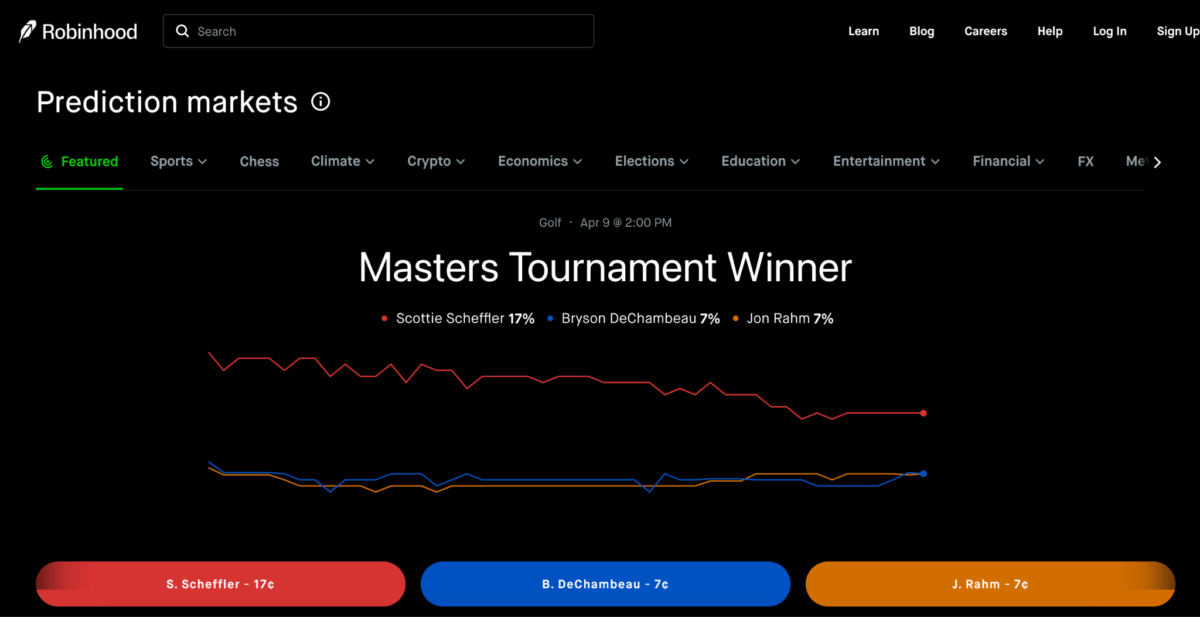
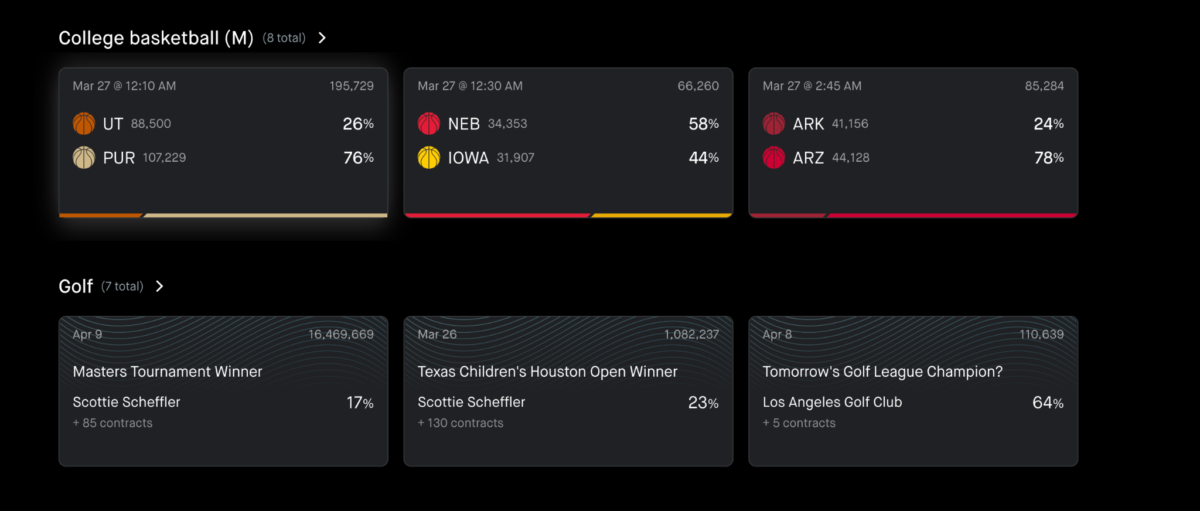
Robinhood Prediction Markets is Robinhood’s event-contract product, built into the same app many users already know for stocks, options, and crypto. It lets users take positions on real-world outcomes through Yes/No contracts, so instead of picking a moneyline or spread, you are buying into the probability of something happening.
The broader Prediction Markets Hub arrived in 2025, although Robinhood had already tested the format with its 2024 election market. Since then, the product has expanded into areas like sports, politics, economics, crypto, and other headline-driven events. After testing it firsthand, our expert view is that this feels much closer to a simplified trading product than a traditional betting app.
That is what makes Robinhood Prediction Markets different. You are not betting into bookmaker odds set by a house. You are trading contracts in a market where pricing moves with demand and implied probability. In simple terms, it sits somewhere between a sportsbook and a trading platform, which is exactly why this Robinhood Review matters for US users trying to work out what the product really is and whether it is better than standard sports betting.
How Robinhood Prediction Markets Work
Robinhood keeps the concept straightforward. Each market is built around a Yes/No event contract, with prices typically running from $0.01 to $0.99. If you hold the winning side through settlement, the contract pays $1. If you hold the losing side, it settles at $0.
A simple example makes it easier to follow. If a contract is trading at $0.53 and you buy Yes, you are risking $0.53 per contract for the chance to receive $1 if that outcome happens. If the event resolves in your favor, you keep the difference between your entry price and the final $1 payout. If not, that contract expires worthless.
After completing our testing on the platform, we found that Robinhood feels much more like a simplified market than a normal betting app. Prices move with demand, and your trade only goes through when someone is willing to take the other side. That is a major difference from a sportsbook, where the house sets the odds and builds in its own margin.
Here are the key mechanics to understand:
Binary contracts: every market is based on a simple Yes or No outcome
Probability-style pricing: a contract priced at $0.53 suggests roughly a 53% market view
Exchange-based structure: you are trading in a market, not betting against a bookmaker
Early exits are possible: you can close a position before the event settles
Standalone markets: this is not a classic parlay-based sportsbook product, although Robinhood does offer some combo-style contracts in select markets
Our expert take is that the format is easier to grasp than it first appears. The real adjustment is not learning the contract itself. It is getting used to thinking in price and probability instead of traditional betting odds.
Is Robinhood Prediction Market Legal & Safe?
This is one of the most important parts of any Robinhood Review for US users, because this product does not operate like a standard sportsbook. The short answer is yes, Robinhood Prediction Markets are legal within a regulated event-contract framework, but access is not the same in every state.
Robinhood offers these markets through Robinhood Derivatives, with contracts listed through KalshiEX or ForecastEx. That matters because the product sits under a federal financial regulatory structure rather than a traditional gambling model. In simple terms, this is one of the main reasons Robinhood can offer prediction markets in a different legal lane from a sportsbook.
From a safety perspective, Robinhood is stronger than many newer prediction-market platforms. It operates inside a more established compliance setup, and your risk is limited to the amount you put into a contract. Still, regulated does not mean risk-free. These are speculative real-money contracts, and you can lose your full stake if the market settles against you.
Factor
Robinhood Prediction
Regulator
CFTC
Legal Basis
Financial instrument (not gambling)
Availability
Most US states (some exclusions)
Minimum Age
18+
Max Risk
Limited to amount staked
Funds Protection
Held in regulated accounts
The state-by-state picture is where readers need to stay sharp. Robinhood makes clear that some contracts are not available in every state or territory, and there are already specific restrictions in places like Maryland and parts of the sports market in Nevada. That means you should always check live availability inside the app before assuming you can trade a contract.
Our expert take is that Robinhood scores well on the legal and safety side compared with less established prediction-market alternatives. It is more structured, more transparent, and easier to trust than a lot of offshore-style options. But it is still speculative trading, so the safer legal setup does not remove the financial risk.
Robinhood Prediction Markets vs Sports Betting
This is where Robinhood really separates itself from a normal sportsbook. After testing both, the difference is not just branding. The structure is completely different.
With Robinhood, you are trading event contracts in a market. With a sportsbook, you are placing bets at odds set by the house. That changes how pricing works, how value works, and how much built-in disadvantage you are dealing with from the start.
Feature
Robinhood Prediction
Traditional Sportsbook
Odds Type
Market-driven probability
Set by bookmaker
Counterparty
Other users
The house
Regulation
CFTC (financial)
State gambling authority
Settlement
$1 or $0 per contract
Variable odds payout
House Edge
None built-in (fees only)
Typically 5–10% margin
Tax Treatment
Capital gains
Gambling winnings
Markets
Events, politics, economy
Sports only
Exit Before Settlement
Yes: sell contracts
Cash-out (limited)
The biggest advantage for Robinhood is that it does not work like a classic sportsbook with bookmaker juice built into every market. You still pay costs through fees or spread, but the setup is cleaner and easier to judge if you are someone who likes thinking in price and probability.
The downside is just as clear. Robinhood is not built for pure sports entertainment in the same way FanDuel or DraftKings are. You are not getting the same depth of props, same-game parlays, boosted promos, or full sportsbook feel.
Our expert verdict is simple. If your goal is more sports action, more betting options, and more promo-driven value, a sportsbook still does that better. If your goal is cleaner pricing, event-based trading, and a fairer structure on paper, Robinhood is the more interesting alternative.
Markets Available on Robinhood Prediction
We tested the platform across multiple market categories. The breadth is impressive for a relatively new feature, though depth in niche sports markets lags behind dedicated prediction platforms like Kalshi.
Category
Example Markets
Sports
Super Bowl winner, NBA MVP, World Series
Politics
US election outcomes, Congressional votes
Economy
Fed rate decisions, inflation data, GDP
Tech & AI
Product launches, earnings beats
Culture
Award show outcomes, viral events
Standout finding: The economy and politics categories are where Robinhood genuinely outshines any sportsbook. You can trade on Fed rate cuts, something no sportsbook offers.
Robinhood Prediction Market Fees, Spreads & Costs
After testing the platform, we found that Robinhood’s cost structure is simple once you strip away the jargon. The key thing to know is that you are usually dealing with Robinhood’s per-contract commission, plus either an exchange fee or a built-in spread, depending on the market.
Here is the short version:
Robinhood commission:$0.01 per contract when you buy or sell
Exchange fee: some markets add a small extra per-contract fee
Spread: other markets build that cost into the price instead
Holding cost: there is no extra fee just for holding a contract to settlement
A quick example shows how that affects returns. If you buy 100 Yes contracts at $0.53, your base cost is $53. Add Robinhood’s commission, and your total outlay rises slightly before you even think about profit.
That is why costs matter more for active traders than casual users. If you are buying and selling frequently, small contract fees add up fast. If you are taking a few positions and holding them to settlement, the fee drag is much easier to manage.
Our expert take is that Robinhood’s pricing is still cleaner than the built-in margin you get with a typical sportsbook. You just need to understand that even a low-fee structure can chip away at your edge if you trade too often.
Robinhood User Experience & App Review
The Robinhood mobile app is genuinely one of the best financial UIs on the market, and prediction markets slot right into that experience. We tested the app on both iOS and Android.
What works well:
Clean, minimal interface, identical to the stock trading experience
Prediction Markets hub is easy to navigate and well-categorised
Real-time price charts on each contract are a big advantage over sportsbooks
Seamlessly integrated with your existing Robinhood cash balance
What could improve:
No desktop/web version for prediction markets, mobile only at launch
Limited market depth data compared to dedicated platforms
The notification system for contract settlement is basic
Robinhood Prediction Markets: Pros & Cons
Pros
CFTC-regulated and federally legal
No built-in house edge
Trade economics, politics & sports
Beginner-friendly app design
24/7 trading on active markets
Cons
State restrictions apply
Fewer sports markets vs sportsbooks
Fees add up for active traders
Niche markets have wide spreads
How to Start Trading on Robinhood Prediction Markets
Getting started is straightforward. Here’s the quick-start process we went through; note that we have a full separate guide on registration for those who want step-by-step detail.
Download the Robinhood app (iOS or Android)
Complete identity verification (SSN + photo ID required, standard KYC)
Fund your account via bank transfer, debit card, or existing balance
Tap the ‘Prediction’ hub from the main navigation
Browse markets, select a contract, and buy YES or NO at the current market price
Our experience: The whole process from download to first trade took under 20 minutes. Existing Robinhood users skip most of this; the Prediction hub is simply available in-app once enabled.
Strategy: How to Make Money on Robinhood Prediction Markets
This is a genuinely underserved area in most Robinhood reviews, so we’ve dedicated real analysis to it. The analysis we made points to three core strategic approaches:
1. Buying Undervalued Probabilities
Markets sometimes misprice outcomes, especially early in a contract’s life. If you believe the market is underestimating a probability (e.g., pricing a Fed rate cut at 30% when economic data suggests 55%), buying YES contracts at $0.30 creates strong expected value.
2. Trading News Volatility
Contracts reprice fast when news breaks. A strong jobs report can swing an inflation contract from $0.40 to $0.65 in minutes. Monitoring news feeds and acting before markets fully adjust is a legitimate edge.
3. Arbitrage Opportunities
Between Robinhood Prediction and other platforms like Kalshi or Polymarket, the same event can carry different implied probabilities. Buying YES on one platform and NO on another — when prices don’t sum to $1, locks in a risk-free profit. These gaps close quickly but exist regularly.
Important caution: These are market-level skills, not gambling systems. Consistent returns require research, discipline, and risk management, not gut feeling.
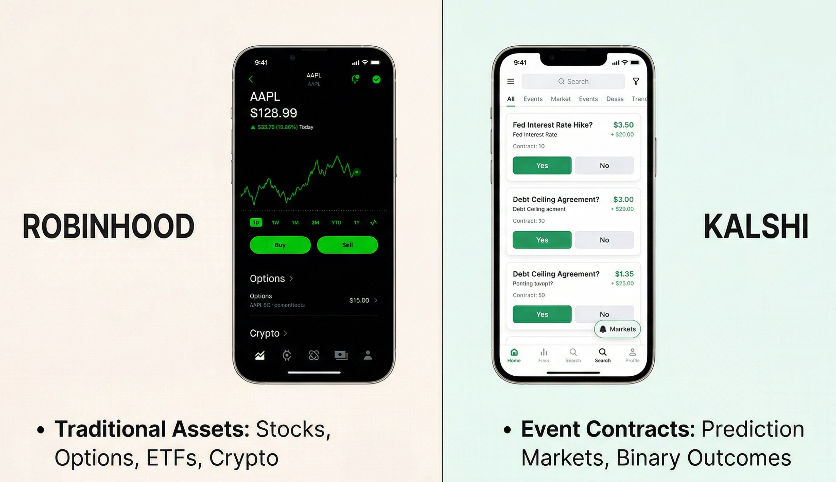
Robinhood vs Competitors: Kalshi & Polymarket
Our research compared the three main prediction market options available to US users. Here’s how they stack up:
Platform
Regulation
User Experience
Market Depth
Best For
Robinhood
CFTC
Beginner-friendly
Moderate
Casual traders
Kalshi
CFTC
Intermediate
Deep (more markets)
Serious traders
Polymarket
Offshore (unregulated)
Crypto-native
Very wide
Advanced/crypto users
Our verdict on Robinhood vs prediction market competitors: Kalshi beats Robinhood for serious traders who want market depth and advanced tools. Robinhood wins for accessibility and integration with a broader financial portfolio. Polymarket offers the widest markets but carries regulatory risk for US users.
Who Should Use Robinhood Prediction Markets?
After extensive testing, here’s how we’d categorize the ideal user:
Beginners: If you already have a Robinhood account and want to dip your toes into prediction trading without opening a new account, this is perfect.
Stock traders: If you’re already trading equities and want exposure to macro events (Fed decisions, election outcomes), this slots naturally into your existing strategy.
Sports bettors exploring alternatives: Robinhood prediction markets legal status and no-house-edge model makes it an attractive, regulatory-safe alternative to offshore betting.
NOT ideal for: High-volume sports bettors who need hundreds of markets, parlays, and live betting, traditional sportsbooks dominate here.
Final Verdict: Is Robinhood Prediction Markets Worth It?
Yes: with caveats. Our complete Robinhood Review gives it a strong recommendation for casual to intermediate traders who want a regulated, fair, and accessible prediction market platform.
The no-house-edge model is genuinely fairer than sportsbooks. The CFTC regulation provides real legal protection. The app is polished and beginner-friendly. For the economy and politics markets especially, there’s simply no sportsbook equivalent.
Where Robinhood falls short: depth of sports markets, lack of a web platform, and fees that compound for active daily traders. Power users should also explore Kalshi for greater market variety.
Our rating: 8/10. A strong new entrant that changes what US users can expect from outcome-based trading.
Robinhood Prediction Markets: FAQs
Is Robinhood Prediction Markets the same as betting?
Not exactly. It can feel similar, but Robinhood structures these markets as regulated event contracts, not standard gambling bets. The biggest difference is that pricing comes from a market, not a bookmaker.
Can you lose more than you invest?
No. Your downside is capped at what you pay for the contract. There is no leverage and no margin-style risk here.
Is Robinhood Prediction Markets legal in all US states?
No. It is available in many US states, but not every state. The app will show whether prediction markets are available where you live.
What fees does Robinhood charge?
Robinhood charges a small per-contract commission, and some markets also include an exchange fee or spread. Casual users will barely notice it, but active traders will.
Is Robinhood better than Kalshi?
It depends on what you want. Robinhood is easier for beginners and feels more accessible, while Kalshi usually offers more market depth for experienced users.
Since graduating with an English and Media degree back in Dublin, I took a leap and landed in sunny Barcelona—where I’ve been working as a copywriter ever since, with over 3 years of experience in iGaming, sports betting, sweepstakes casinos, and everything in between. As an avid sports bettor and a recreational casino goer (yes, I’ve chased my fair share of bonus rounds), writing about this industry quickly became my niche. Working with platforms like WSN, Casinomeister, Online Casino Canada/UK/Ireland, I’ve written about pretty much anything you can bet on and would consider myself a bit of an expert! These days, I’m still working out of Barcelona—a city that lives and breathes sport. You’ll regularly find me at their matches, losing my head over a dodgy VAR decision. Favourite part of the job? Testing the platforms, games, and bonuses—all in the name of research, of course. 😉 There’s nothing better than rolling up your sleeves, trying out the latest offers, and sharing what’s actually worth your time and money. My message to you: Play smart, have fun, and don’t chase losses – the house always wins. And hey, if a sportsbook’s promo looks too good to be true… read the terms and conditions (trust me). 😄