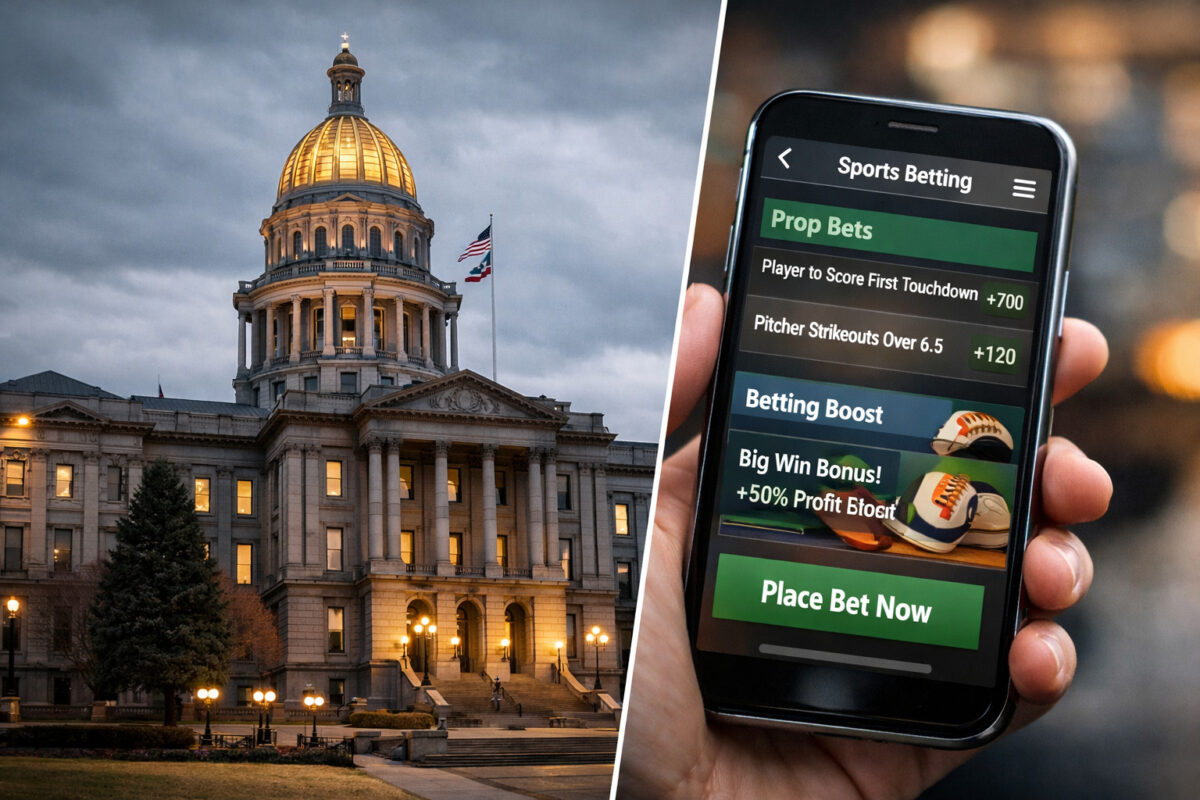


Colorado’s legislature has introduced SB26-131, a sweeping overhaul of the state’s gaming law that would reshape how sports betting works in the Centennial State — from banning proposition (prop) bets and tightening advertising limits, to curbing deposit activity and new reporting requirements for operators.
Colorado’s legal sports betting market, legal since 2020 and taxed at 10% of net proceeds, may soon look very different for operators and bettors alike. Newly introduced bill SB26-131 (the “Sports Betting Protections” bill) heads to committee debate after being filed in the 2026 session.
Under the current proposal:
Violations would trigger class 2 misdemeanors and up to $25,000 fines.
Several forces have converged to push this bill forward:
1. The Maturation of the Market
Colorado’s sports betting industry has seen explosive growth since 2020, with online and retail bets generating hundreds of millions annually. Regulations written early in the legalization experiment are now being reassessed for consumer protection and fiscal outcomes.
2. Tax Policy Adjustments Already in Motion
In 2025, lawmakers passed HB25-1311 to phase out promotional tax deductions — moves expected to generate an extra ~$13 million for the Water Plan Implementation Cash Fund in FY 2026-27.
Colorado’s water fund has been a recurrent theme in gaming tax policy, given drought and infrastructure needs. Voters removed a $29M cap on how much sports betting tax revenue the state could retain, amplifying the stakes for how that money is directed.
If SB26-131 becomes law:
Critics warn that over-restriction could stunt market competitiveness — especially against other U.S. states where prop bets are a marquee product and advertising is lively. Opponents argue that bettors may simply migrate to offshore or unregulated platforms that don’t enforce similar rules.
There’s also a risk that deposit and promo limits could disproportionately affect casual bettors without meaningfully reducing problem gambling among high-risk players.
Colorado’s legislative tweak isn’t a tweak at all — it’s a systemic shift toward tighter control over how sports betting behaves in the public sphere, how it’s marketed, and how its revenue is directed. The move could set a precedent for other states balancing economic benefits with consumer harms.
Expect spirited debates in committee hearings, with operators, consumer advocates, and fiscal hawks pushing sharply different visions for the future of betting in the U.S.