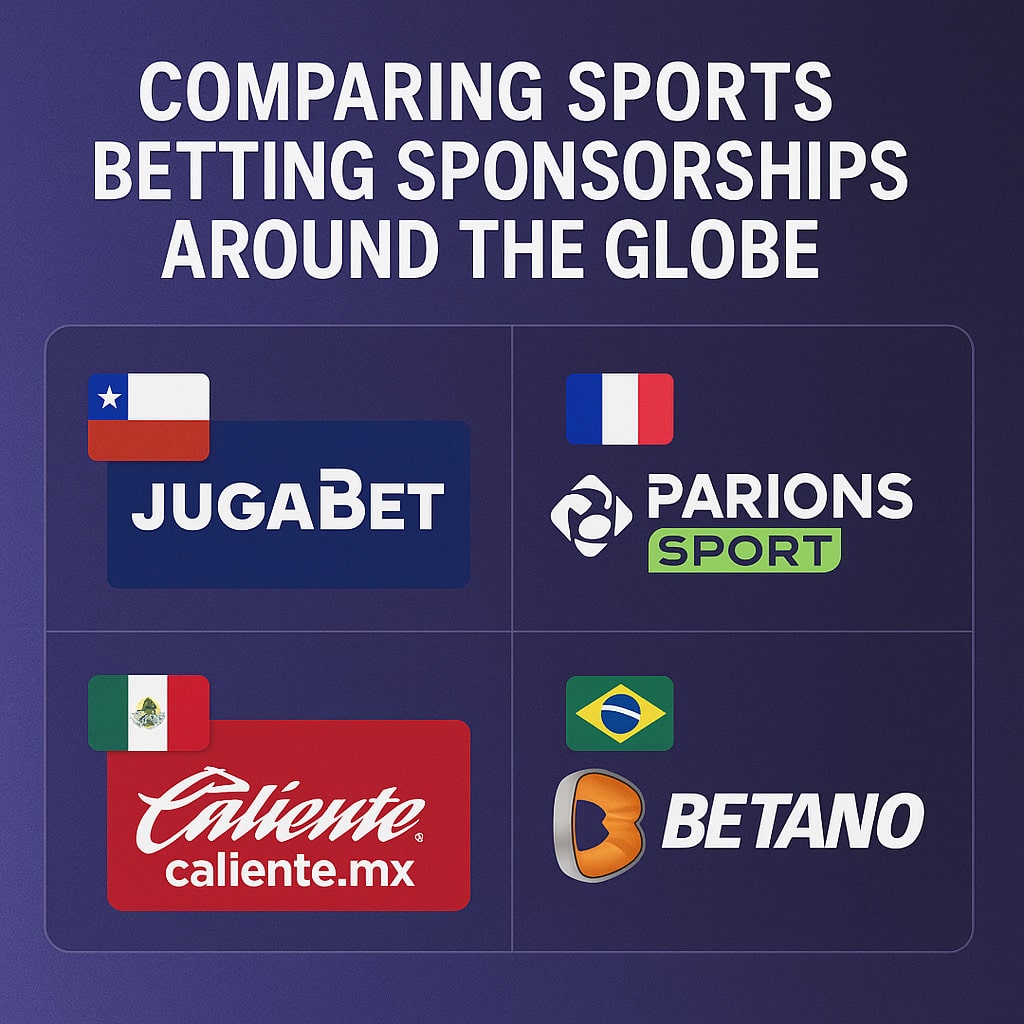


Sports-betting companies bankroll jerseys, tournaments, arenas, and entire broadcasts — yet each country sets its own rules for who can sponsor what and how betting ads can appear. From Caliente dominating Mexico’s football scene and Betano holding naming rights in Brazil, to ParionsSport (FDJ) partnering with PSG in France or DraftKings and FanDuel driving U.S. league activations, sponsorships have become one of the most powerful marketing engines in the iGaming industry.

This global comparison explores how major operators invest in leagues and clubs to shape their public image — and how national regulators, federations, and laws redefine what’s allowed. Each section below details championship sponsorships, bookmaker deals, and the advertising restrictions governing the sports-betting market in 2025.
Since late 2023, Chile’s football authorities have undergone a dramatic transformation. The Asociación Nacional de Fútbol Profesional (ANFP) officially ended its naming-rights deal with Betsson for the top division (“Campeonato Betsson”) after the Supreme Court reaffirmed that online gambling is illegal unless explicitly authorized by law. The contract — originally valued at around USD 8 million over three years — was terminated at the Ministry of Justice’s instruction, which ordered the ANFP to cease partnerships with offshore betting operators.
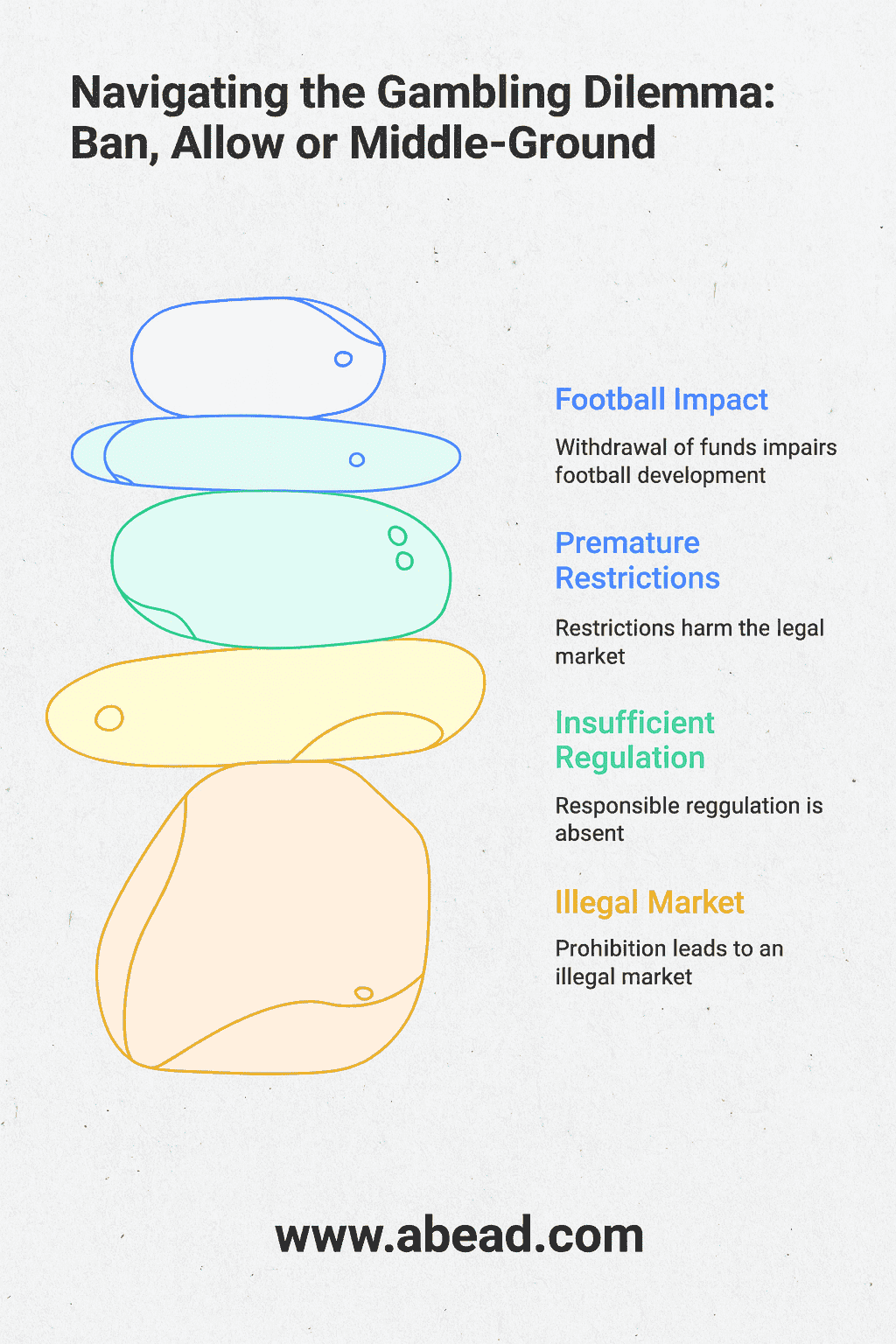
The delicate balance that regulators, sports organizations, and policymakers face when addressing the role of betting in football and broader society./ Source: ABED.com
Until this ruling, Betsson had been one of the country’s most visible sponsors, also supporting Primera B (Campeonato Ascenso Betsson) and several local teams. The cancellation marked a turning point: from widespread sportsbook branding on shirts and broadcasts in 2022–23 to almost none in 2024–25. Clubs that once relied on those deals have been forced to replace them with non-betting partners, affecting league revenues.
Despite Chile’s restrictive legal climate, Jugabet has emerged as a notable exception. In 2024, the operator became the main shirt sponsor of Universidad de Chile, signing a historic multimillion-peso contract that marked one of the most significant deals in the club’s modern era. Soon after, Jugabet extended its reach by partnering with Colo-Colo, Ñublense, and Deportes Temuco, becoming one of the few betting brands with visible presence across multiple professional teams in the country.
While these agreements were signed amid ongoing debate over betting regulation, they demonstrate how some operators continue to invest in local football while awaiting formal licensing clarity. Jugabet’s marketing strategy blends brand visibility on kits with digital campaigns and community activations that highlight responsible play and entertainment value rather than aggressive promotion.
Other brands, such as Coolbet, Betsala, Estelarbet, and Tikitaka, have adopted more conservative approaches—focusing on online presence, influencer marketing, and regional sponsorships across Latin America. These operators maintain brand awareness through digital partnerships and streaming integrations but generally avoid official club inventory to reduce legal exposure.
The Ministry of Justice and the Superintendencia de Casinos de Juego (SCJ) maintain that, until Congress passes an online-gaming law, sportsbooks lack domestic authorization. Following Supreme Court orders, ISPs were instructed to block access to major platforms, resulting in a de facto freeze on team and league sponsorships—especially in football.
For now, these six brands should treat in-stadium or team-linked activations as high-risk until the Senate finalizes licensing, tax and ad rules. The compliant path is responsible, geo-sensitive digital advertising and foreign media buys that avoid Chilean club IP, staying within SCJ and ministerial guidance.
Mexico – A Mature Market Dominated by Caliente
Mexico has one of the most developed sports-betting sponsorship ecosystems in Latin America. The operator Caliente.mx holds a near-monopoly on high-profile deals: it is the Casa de Apuestas Oficial of Liga BBVA MX, Liga MX Femenil, and Liga Expansión MX, as well as an official partner of the Mexican National Team. In 2025, Caliente also became a sponsor of the CONCACAF Gold Cup, further cementing its regional dominance.
The market operates under the Ley Federal de Juegos y Sorteos, regulated by the Dirección General de Juegos y Sorteos (DGJS) within the Secretaría de Gobernación (SEGOB). Only entities with approved federal permits can advertise or sponsor sports teams.
Caliente’s partnerships go beyond logos — they include stadium naming rights, fan engagement programs and in-stadium activations. For example, several Liga MX clubs feature Caliente as a shirt or sleeve sponsor, including Club Tijuana (Xolos) and Club Puebla. These contracts give the brand prime visibility both on TV and at live events, supported by official DGJS permits.
All betting advertising must display the operator’s license number and responsible-gaming messages. According to SEGOB and DGJS guidance, ads cannot mislead consumers or target minors. Promotions like “risk-free bets” or unverified bonuses may lead to administrative sanctions. Campaigns must clearly disclose terms and avoid inducement language, aligning with Mexico’s consumer-protection framework.
United States – State-by-State Rules and League Partnerships
Since the repeal of PASPA in 2018, the U.S. has become the world’s most diverse sports-betting landscape. Each state regulates independently, creating both opportunity and complexity for sponsors. The NFL partners officially with Caesars, DraftKings, and FanDuel; the NBA lists DraftKings and FanDuel as co-official betting partners; and MLB collaborates with BetMGM and DraftKings.
Teams across the NBA, NFL, and MLB now feature betting lounges, branded content, and cross-platform marketing. For example, FanDuel’s sportsbook lounge at the Phoenix Suns Arena and Caesars’ activation at MetLife Stadium show how deep integrations have become. Media partnerships with ESPN and Turner Sports amplify sportsbook visibility across broadcasts and streaming.
Two pillars guide advertising: the American Gaming Association’s (AGA) Responsible Marketing Code for Sports Wagering and state-specific rules (like the New Jersey Division of Gaming Enforcement’s advertising guidelines). Campaigns must include responsible-gaming disclaimers, prohibit “risk-free” phrasing, and restrict celebrity/college partnerships targeting minors.
India has one of the world’s largest sports audiences but maintains strict controls on gambling promotion. The Ministry of Information & Broadcasting (MIB) issued multiple advisories (2023–24) prohibiting offshore betting ads and their surrogates, warning influencers and media platforms of penalties. The Advertising Standards Council of India (ASCI) also forbids betting ads that glamorize wagering or imply social success.
No major Indian sports team has an official sportsbook sponsor due to regulatory risk. Instead, fantasy-sports operators like Dream11 and My11Circle fill that space — distinct from betting under Indian law. Some surrogate campaigns have attempted to mimic betting brands (e.g., through “news” or “sports info” sites), but MIB crackdowns have made these nearly impossible in 2025.
ASCI guidelines require full disclaimers for online real-money gaming and prohibit using minors, national symbols, or aspirational messaging tied to gambling. Brands must register with local authorities for any gaming or advertising content, and offshore operators are explicitly banned from sponsoring local teams or leagues.
France’s betting sector is tightly regulated by the Autorité Nationale des Jeux (ANJ). Licensed operators include ParionsSport (FDJ), Betclic, Winamax, and Unibet. ParionsSport maintains a long-term partnership with Paris Saint-Germain (PSG), while Winamax runs multi-club campaigns across Ligue 1 sides such as Lens, Reims, and Rennes.
ParionsSport’s partnership with PSG involves branding, digital rights, and fan-engagement initiatives, extending to women’s football as well. Winamax leverages its partnerships for promotional tournaments and online-offline crossover campaigns. These deals are approved by ANJ and align with the country’s responsible-gaming commitments.
France restricts inducement marketing: operators may not advertise bonuses exceeding €100 publicly. Ads must avoid glamorizing gambling and limit the use of athletes or youth-appealing figures. The ANJ’s 2022–2024 communication framework prohibits marketing on children’s channels and demands visible responsible-gaming warnings.
Following Bill C-218 (2021), Canada legalized single-event sports betting under provincial control. Ontario leads the market through the Alcohol and Gaming Commission of Ontario (AGCO) and iGaming Ontario. Major team owner MLSE (Maple Leaf Sports & Entertainment) signed partnerships with FanDuel/PokerStars and PointsBet Canada, covering the Maple Leafs, Raptors, Toronto FC, and Argonauts.
Ontario franchises display sportsbook logos on broadcast signage, digital content, and official apps. These deals represent a coordinated model where operators, regulators, and rights-holders co-create responsible activation campaigns while adhering to AGCO rules.
As of February 2024, AGCO banned the use of active athletes and most celebrities in betting ads, except for responsible-gaming messages. Promotions can only appear on owned channels; public inducements or “bonus” ads are prohibited. All communications must include age restrictions (19+) and responsible-gaming links.
Argentina – Provincial Control and High-Profile Club Deals
In Argentina, each province governs its own gambling rules. In Buenos Aires City, the Lotería de la Ciudad (LOTBA) regulates online betting; in Buenos Aires Province, the IPLyC GBA does the same. Prominent clubs like River Plate (Codere) and Boca Juniors (Betsson) have inked high-value shirt deals, while the AFA has signed regional agreements with brands such as Parimatch and VBET.
River’s 2022 upgrade made Codere the club’s main front-of-shirt sponsor; Boca’s 2023 deal with Betsson extended to both men’s and women’s teams, confirmed by the AFA and club press releases. These agreements are legally possible because the operators are licensed within Argentina’s regulatory framework.
LOTBA and IPLyC require operators to display RG messages and restrict advertising to adults. Under Decree 181/2019, creatives cannot depict minors or use misleading incentives. Each province enforces its own standards, so campaigns must verify local jurisdiction approval before launch.
Brazil officially regulated fixed-odds betting through Law 14.790/2023, bringing clarity to a market that had previously operated in a grey zone. The most visible sponsorship is Betano, which owns naming rights for both the Copa do Brasil and the Campeonato Brasileiro Série A. Major clubs like Flamengo, Atlético Mineiro, and Fluminense have also signed multi-year deals with betting operators.
In 2025, Flamengo transitioned its master sponsor from Pixbet to Betano, reflecting a shift toward licensed operators under new federal standards. The Confederação Brasileira de Futebol (CBF) now requires that only Ministry-authorized sportsbooks appear on uniforms and match properties, professionalizing sponsorship management nationwide.
The Secretaria de Prêmios e Apostas (SPA) and CONAR regulate advertising. Ads must target adults only, include responsible-gaming messages, and avoid featuring athletes or celebrities appealing to minors. A pending Senate bill aims to further limit celebrity endorsements. Compliance with SPA license rules and CONAR’s advertising code is mandatory for all sportsbook sponsors.
| Country / Market | Main Regulator(s) | Main Betting Sponsors / Examples | Advertising Restrictions |
| 🇨🇱 Chile | Ministry of Justice / Superintendencia de Casinos de Juego (SCJ) | (No active local deals) Former: Betsson (ANFP). Popular digital brands: Jugabet, Coolbet, Betsala, Estelarbet, Megawin, Tikitaka | Ban on betting sponsorships in sports until new law passes; digital-only and offshore targeting permitted |
| 🇲🇽 Mexico | Secretaría de Gobernación (SEGOB) / DGJS | Caliente.mx (official betting house of Liga MX & National Team) | Ads must show license number and RG message; no misleading claims; youth targeting restricted |
| 🇺🇸 United States | State regulators / AGA self-regulation | DraftKings, FanDuel, Caesars, BetMGM, PointsBet | State-specific limits on inducements; AGA bans “risk-free” language; RG messaging mandatory |
| 🇮🇳 India | MIB / ASCI | Fantasy-only brands: Dream11, My11Circle | Offshore betting ads banned; surrogate ads prohibited; influencer marketing monitored |
| 🇫🇷 France | Autorité Nationale des Jeux (ANJ) | ParionsSport (FDJ) x PSG, Winamax multi-club strategy, Betclic | Ad volume capped; bonuses limited to €100; must include RG messages and ANJ logo |
| 🇨🇦 Canada (ON) | AGCO / iGaming Ontario | FanDuel/PokerStars, PointsBet Canada (MLSE partnerships) | Public inducements banned; owned-channel promos only; RG links mandatory |
| 🇦🇷 Argentina | Provincial: LOTBA / IPLyC GBA | River Plate x Codere, Boca Juniors x Betsson, AFA x Parimatch/VBET | Ads restricted to licensed provinces; RG messaging required; no minors |
| 🇧🇷 Brazil | Ministério da Fazenda / SPA / CONAR | Betano (Copa do Brasil, Série A), Pixbet (Flamengo, Corinthians) | Ads must include RG message; youth events off-limits; influencer use restricted |
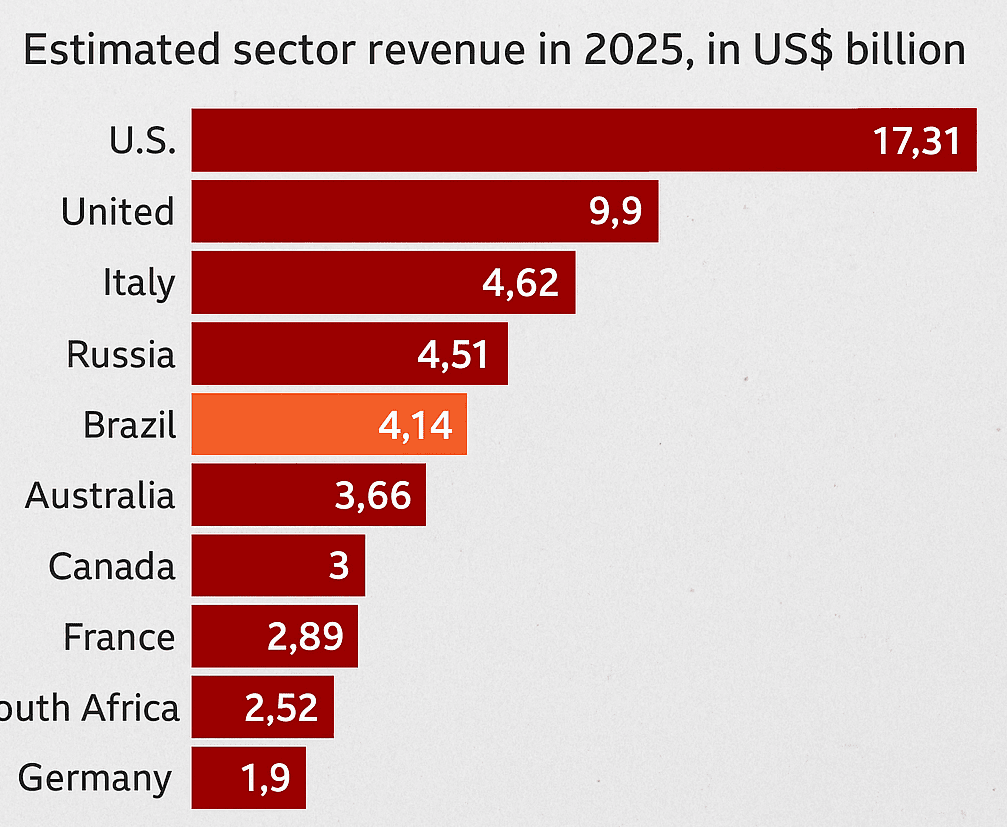
Across the globe, sports-betting sponsorships are both a revenue driver and a regulatory challenge. Mature markets like France, the U.S., and Ontario in Canada showcase how strict oversight coexists with creative, responsible partnerships. Emerging markets like Chile, Argentina, and Brazil continue to refine the balance between commercial opportunity and player protection.
For marketers and operators — including those active in Chile — understanding these distinctions is crucial to building compliant, long-term visibility in sport.