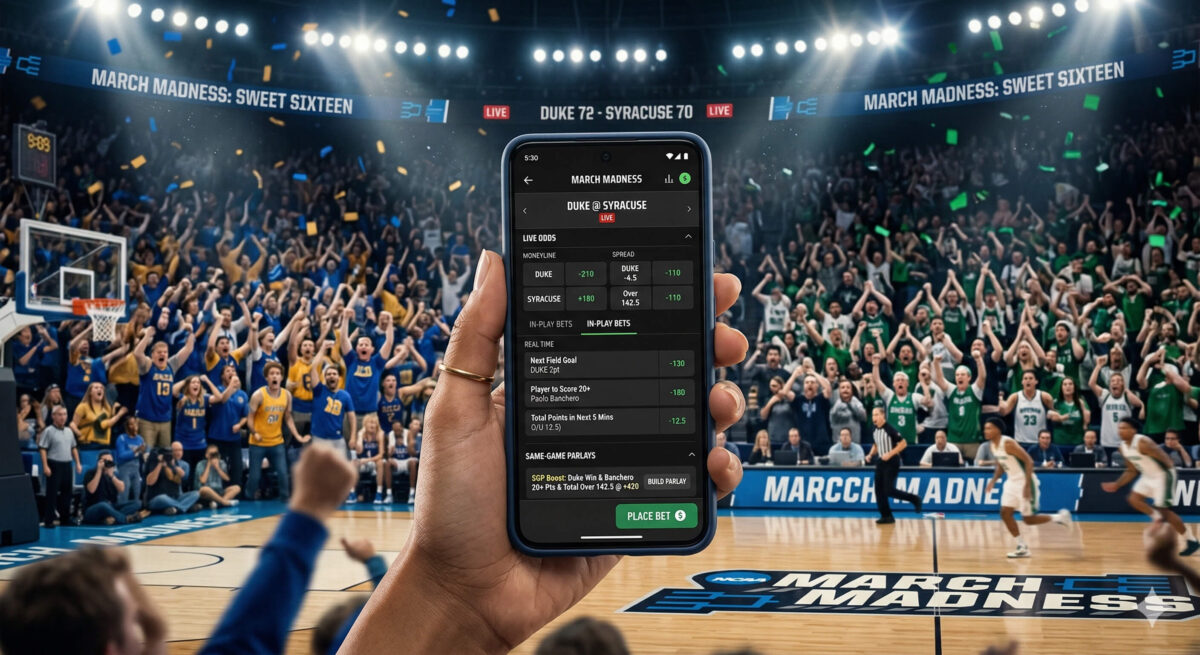
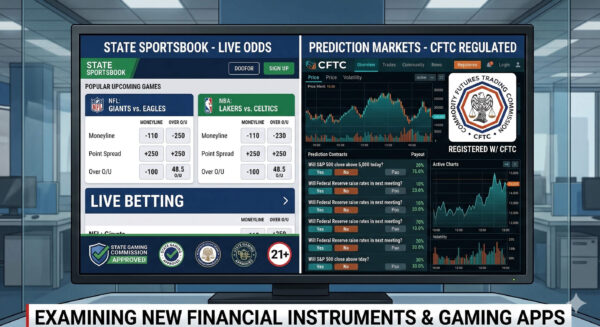
On the first Thursday of last year’s NCAA tournament, one mid-sized US sportsbook saw a 38% spike in user logins, but only a 12% increase in betting handle. The gap wasn’t due to a lack of interest. It was friction: too many clicks, slow odds refresh, and generic bet offers. In a market where DraftKings and FanDuel dominate, March Madness has become less about volume and more about how well operators convert attention into action.
March Madness is structurally different from other betting events. Unlike the NFL season, which stretches engagement across months, the NCAA tournament delivers concentrated volatility: 67 games in under three weeks, unpredictable outcomes, and a massive influx of casual bettors.
According to the American Gaming Association, Americans legally wagered over $2.7 billion on March Madness in 2023, with growth continuing as more states legalize online betting. That volume is deceptive. For operators, profitability depends less on total handle and more on product mix—especially parlays, in-play betting, and pricing efficiency.
Reuters reported in early 2025 that US sportsbooks are increasingly shifting focus from acquisition, heavy promotions to retention and monetization strategies, reflecting tighter margins and rising customer acquisition costs.
The implication is clear: March Madness is no longer a marketing event. It is a stress test for product design.
Same-game parlays (SGPs) have become the financial backbone of sportsbook economics. They offer higher margins than straight bets and allow operators to shape user behavior.
But the March Madness environment complicates SGP execution. College basketball has less predictable player-level data than the NBA, and rotations vary widely between teams. That makes pricing riskier.
Operators are responding by narrowing the scope of SGPs. Instead of offering dozens of player props, some are curating “guided parlays”, bundled bets with pre-selected legs optimized for both engagement and margin.
A worked example illustrates the shift:
The user perceives simplicity; the operator captures efficiency.
This subtle shift—from open-ended customization to structured choice—is one of the least visible but most important changes in sportsbook strategy.
If pre-game bets drive volume, in-play betting drives engagement duration.
During March Madness, game momentum swings are frequent—double-digit leads evaporate, underdogs surge late. This volatility is ideal for in-play betting, where odds update in real time.
However, delivering a seamless in-play experience is technically demanding. Latency of even two seconds can expose operators to arbitrage or frustrate users.
Bloomberg noted in 2024 that sportsbooks are investing heavily in low-latency data infrastructure and automated trading models to handle live betting demand, particularly during high-traffic events like March Madness.
The strategic shift here is subtle but powerful:
Operators are no longer competing on odds alone—they are competing on speed.
A faster interface doesn’t just improve user experience; it directly affects revenue capture.
For years, March Madness promotions centered on deposit bonuses and risk-free bets. That playbook is weakening.
Customer acquisition costs in US sports betting have risen sharply, with some estimates placing them above $300 per user in competitive states. As a result, operators are reallocating budgets away from aggressive promotions toward product improvements.
A counterintuitive insight:
Reducing promotions can increase profitability without significantly reducing engagement—if the product experience is strong enough.
Operators are experimenting with:
The logic is straightforward: friction reduction often outperforms financial incentives.
March Madness introduces a unique pricing challenge: a flood of bets on favorites and popular teams, often driven by casual sentiment rather than statistical edge.
Operators are using this behavior to adjust pricing asymmetrically.
For example:
This is not new in theory, but the scale of data now available allows for real-time adjustments at a granular level.
Data from the Federal Reserve’s FRED database shows the broader growth of digital wagering markets in the US, enabling operators to refine pricing models with increasingly large datasets.
The non-obvious insight here:
March Madness is less about predicting outcomes and more about predicting bettor behavior.
Despite these innovations, several structural limitations remain.
First, regulatory fragmentation across US states complicates product rollout. Features available in New Jersey may not be permitted in Texas or California, limiting scalability.
Second, data limitations in college sports reduce the reliability of advanced models compared to professional leagues. This increases pricing risk, particularly for player-based bets.
Third, market concentration remains high. DraftKings and FanDuel control a significant share of the US market, making it difficult for smaller operators to compete on both product and marketing simultaneously.
Finally, there is a saturation risk. As all operators converge on similar strategies—SGPs, in-play betting, UX optimization—the differentiation gap narrows.
March Madness is revealing something deeper about the US betting market. Sportsbooks are no longer just pricing engines—they are becoming entertainment platforms where product design, speed, and behavioral insight matter as much as odds.
The operators that win are not necessarily those with the sharpest models, but those that understand how attention converts into action in real time.
In a tournament defined by upsets, the real disruption may not come from the teams on the court—but from the products in bettors’ hands.
We use cookies for ads and to improve your experience. By continuing on the site, you agree to our Privacy Policy. Read more about it