We went 7 for 14 on our fight winners across the full card at Toyota Center in Houston. For us, it was a humbling night overall, one that served as a sharp reminder of how quickly this sport can flip the script on even the most carefully constructed analysis.
Our main card was rough, with only three winners landing in Costa, Smith and Medic, the latter being our cleanest call of the entire evening. The prelims offered more promise, with four correct winners highlighted by a perfect, exact prediction on Alden Coria. Sean Strickland’s statement performance in the main event was the biggest miss of the night, and we’ll own it fully. Let’s break down what we got right, what we got wrong, and what actually unfolded inside the Octagon at every stage of the card.
Main Card Results
Anthony Hernandez by Unanimous Decision
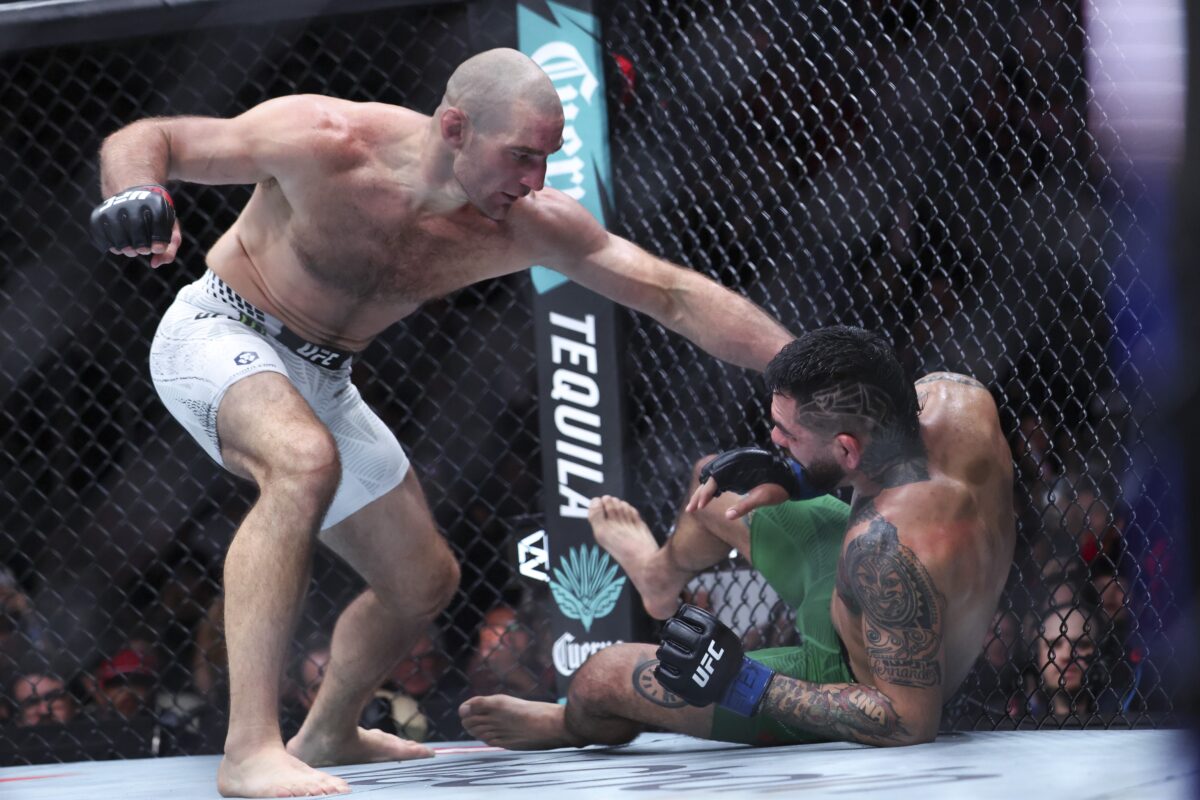
What Actually Happened: Strickland turned in one of the best performances of his career, stopping Hernandez in the third round. After two rounds of sharp, educated jabbing and complete pace control on the feet, Strickland hurt Hernandez with a knee to the midsection early in the third that caused “Fluffy” to fold and retreat.
Strickland pounced immediately, swarmed with a barrage of punches, and put Hernandez down along the fence before the referee waved it off at 2:23.
Why We Predicted Hernandez: We were convinced by the numbers. Hernandez’s elite grappling credentials and relentless approach appeared perfectly designed to frustrate Strickland over five rounds. We acknowledged Strickland might steal a round with striking volume but backed Hernandez’s youth and wrestling to carry the championship rounds.
Our fundamental error was overestimating how much Hernandez’s wrestling would function against a sharp, fully prepared Strickland. His jab was the best version we’ve seen, and the knee to the body was a finishing weapon we simply didn’t model. Betting against a motivated Strickland is a dangerous proposition regardless of what the stylistic math suggests.
Uros Medic by KO/TKO
What Actually Happened: Medic wasted no time whatsoever. In the first real exchange of the fight, he dropped a left hand over the top that found Geoff Neal’s temple and put him down and out in a flash at 1:19 of round one.
Three straight first-round knockout victories now for ‘The Doctor,’ who sits at 5-2 in the UFC since changing weight classes.This was one of the best performances of the night.
Why We Predicted It: This was our best call of the evening. We identified Medic’s technical countering ability and three-fight finishing streak as decisive advantages against Neal’s tendency to press forward with volume. And we specifically flagged Neal’s recent knockout loss to Prates as a genuine concern about his chin at 35, making him vulnerable to another highlight finish.
We projected Medic would time Neal’s aggressive entries with precise counters in round one, and that’s exactly what happened. Method, round, and manner, all on the money!
Melquizael Costa by Unanimous Decision
What Actually Happened: Costa delivered the biggest win of his career and the most dramatic finish of the main card, stopping the durable Dan Ige inside the first round in a manner nobody saw coming. He stung Ige with a front kick up the middle early, and the two continued trading into the final minute of the round when Costa uncorked a spinning back kick.
That kick caught Ige just below the left eye and sent him crashing to the canvas. Costa pounced and it was over at 4:56. Six straight wins now for Costa who became the first fighter to finish Ige in the UFC and should have a ranking next to his name when the updates drop.
Why We Predicted It: We correctly identified Costa as the superior striker with the better trajectory, backing his striking accuracy to produce cleaner, more meaningful shots than Ige’s volume-based approach. We projected his wrestling would secure takedowns against Ige’s somewhat lacking takedown defense.
We anticipated him winning the first two rounds clearly before Ige potentially stole the third with late pressure. And we got the winner right against a seasoned, durable veteran. The only shortcoming was projecting a decision when Costa had a spinning back kick highlight finish in mind.
Ante Delija by KO/TKO
What Actually Happened: Spivac and Delija put on an old-fashioned heavyweight scrap that swung back and forth across all three rounds. Spivac took the opener, busting up Delija’s nose with a sharp jab and right hands that kept him leaking crimson.
Delija roared back in the second, putting Spivac on shaky footing and genuinely threatening to shift the contest entirely. In the third, Spivac reasserted control, dragged Delija to the canvas and got the better of the late exchanges to seal it. All three judges sided with Spivac with 30-27, 29-28, 29-28 scores.
Why We Predicted Delija: We were convinced by his higher strikes per minute and his knockout power, which appeared a perfect stylistic nightmare for Spivac’s 50% striking defense. At heavyweight, one clean uppercut or overhand right changes everything, and we backed Delija’s explosiveness to create that moment early before Spivac could impose his wrestling.
We completely underestimated Spivac’s durability and the significant improvement in his striking. He wasn’t just surviving exchanges, he was winning them. Delija’s power was real, but Spivac’s chin and output were better.
Jacobe Smith by Unanimous Decision
What Actually Happened: Smith delivered one of the most memorable moments of the night. Midway through the opening round, Harrell shot for a takedown and put Smith on the mat, only for Smith to use Harrell’s own momentum to roll through into a crucifix position and immediately unload the ground-and-pound that ended the contest at 3:01.
A third straight stoppage win for the DWCS Class of 24 product, who called out Kevin Holland post-fight and looks firmly established as a legitimate welterweight threat.
Why We Predicted It: We backed Smith’s elite NCAA wrestling and UFC experience to prove decisive over three rounds. We anticipated him establishing his wrestling early using his reach advantage to set up takedowns against Harrell’s regional-level takedown defense.
We correctly identified Smith as the superior fighter whose wrestling credentials would overwhelm Harrell. However, we simply undersold how quickly and brutally he would impose his will. Rather than grinding out three rounds, Smith turned a defensive scramble into a dominant crucifix finish that rendered the scorecards entirely unnecessary.
Zachary Reese by Unanimous Decision
What Actually Happened: Pereira opened the main card with a gritty, bloody affair that had plenty of swings and enough action to keep the Houston crowd fully invested. He got the better of the opening round, landing the heavier shots and putting Reese on the canvas.
Reese had his moments in the later rounds with steady output and close-quarters success, but Pereira grinded through the adversity and came out the other side. All three officials scored it for Pereira by split decision, 29-28, 29-28, 29-28. This snapped an extended losing skid for the Brazilian.
Why We Predicted Reese: Our confidence stemmed from what we identified as a significant wrestling advantage over an inconsistent opponent. We backed Reese’s high takedowns per fight to overwhelm Pereira’s takedown defense through volume.
We also projected his 4 inch reach advantage would allow him to establish the jab before shooting, controlling cage positioning. And we expected Pereira’s flashy striking to produce early highlights before Reese’s physicality took over. But, we were wrong on both fronts. Pereira’s takedown defense held up far better than projected, and we badly underestimated his striking output and ability to control the pace on the feet when the grappling didn’t materialise.
Preliminary Card Results
Chidi Njokuani by KO/TKO
What Actually Happened: Leal and Njokuani traded on the feet for fifteen minutes with both men refusing to back down. Leal threw and landed greater volume throughout, staggering Njokuani in the second round and relentlessly pressing forward from the opening bell to the final one.
Njokuani was more efficient and landed at a high clip as always, but consistently struggled to make Leal back up at any point in the contest. The judges were unanimous: 30-27, 29-28, 29-28 for Leal.
Why We Predicted Njokuani: We backed Njokuani’s reach advantage to control distance and land finishing combinations as Leal rushed forward to close the gap. We viewed Leal’s relentless forward-pressing volume style as precisely the kind of game plan that Njokuani’s technical precision is designed to exploit.
In practice, Leal’s output and pressure proved exactly the game plan that Njokuani’s countering style could never fully shut down. We gave too much weight to Njokuani’s precision and not nearly enough to Leal’s durability, volume, and willingness to keep pressing regardless of what he walked into.
Ode Osbourne by Unanimous Decision
What Actually Happened: Alibi Idiris registered his first UFC victory in emphatic fashion. He leaned on a consistent grappling advantage to distance himself from the experienced Osbourne across all three rounds. The two exchanged shots on the feet without either landing anything of real substance before Idiris shifted to wrestling.
He put Osbourne on the canvas, and methodically let the clock run out in a controlling position. Osbourne couldn’t find the shots to shift the scorecards. Idiris won all three cards with 30-27, 30-27, 29-28, bouncing back immediately after the first loss of his career.
Why We Predicted Osbourne: We backed his UFC experience and reach advantage to control distance and disrupt Idiris’s rhythm with timely takedowns. We projected his wrestling credentials against Idiris’s zero takedown offense would generate control opportunities that accumulated on the scorecards.
The painful irony is that Idiris did precisely what we projected Osbourne would do. He used wrestling to dominate and prevent his opponent from imposing any game. We correctly identified the winning stylistic pathway; we just assigned it to the wrong fighter.
Alden Coria by Unanimous Decision
What Actually Happened: Coria delivered exactly the performance we projected from start to finish. He established his jab early while mixing in timely takedowns to control cage positioning. His most impressive work came in the third round when he staggered Gurule and landed his most significant strikes of the contest. All three judges scored it 30-27 for the local flyweight.
Why We Predicted It: This was our cleanest prediction of the preliminary card. We identified Coria’s 100% takedown accuracy as a decisive advantage against Gurule’s 56% takedown defense and backed his jab to establish early distance before his wrestling controlled position.
We projected Gurule would attempt volume striking early but that Coria’s 78% striking defense would limit clean shots. Every element proved accurate. The jab established distance, the wrestling created control, and the 30-27 sweep was exactly what we envisioned.
Joselyne Edwards by Unanimous Decision
What Actually Happened: Edwards picked up a significant measure of revenge against Cornolle with a dominant second-round submission finish. After an opening round spent largely in the clinch, Edwards came out far more aggressive in round two.
She battered Cornolle with hammerfists on the canvas before briefly returning to the feet, where she forcibly put the French fighter back to the mat and quickly locked up the fight-ending rear-naked choke at 2:24.
Why We Predicted It: We correctly identified Edwards as the superior fighter with the volume striking, wrestling, and momentum to control the outcome. We projected she would win at least two rounds with effective grappling and striking volume, grinding out a clear decision.
We were right on the winner and the fundamental dynamic of the fight. However, we underestimated how complete her performance would be. She didn’t need the judges.
Ramiz Brahimaj by Submission
What Actually Happened: Soriano and Brahimaj engaged in a competitive battle across all three rounds that was genuinely difficult to score in real time. Brahimaj offered more volume and variety in round one, landing particularly well with body kicks while Soriano found sporadic power shots.
In rounds two and three the fight shifted to grappling, with Brahimaj initiating clinch exchanges and getting to advantageous positions more frequently. However, Soriano landed the harder blows whenever they traded meaningful shots. The judges came out unanimously for Soriano with 29-28, 29-28, 29-28 on the cards.
Why We Predicted Brahimaj: We were fully bought in on Brahimaj’s elite submission game and projected he would weather Soriano’s early striking while hunting takedown opportunities.
The submission never came. Brahimaj had real success in the clinch and grappling exchanges. But Soriano’s striking output landed harder and more meaningfully than Brahimaj’s volume approach. We underestimated Soriano’s ability to make individual shots count, and the finishing sequence we projected simply never materialised.
Jean-Paul Lebosnoyani by Decision
What Actually Happened: Lebosnoyani outworked the veteran Phil Rowe across three rounds. He took full advantage of Rowe’s tendency to start slowly, pressing the action in the opener and getting the veteran to the canvas without much trouble.
Over the final two rounds he continued to get the better of the exchanges, chasing submissions when available and landing shots. Rowe’s size and experience kept things close enough for a split verdict, but Lebosnoyani emerged on the right side with 29-28, 29-28, 29-28 on the scorecards.
Why We Predicted It: We correctly identified his switch stance as a key tool for creating angles against Rowe’s orthodox base and correctly projected he would exploit Rowe’s slow start to build a lead in round one. We correctly backed his superior accuracy and volume to prove decisive over fifteen minutes, and that’s exactly what happened.
The fight was closer than we expected, as Rowe had enough good moments. But backing Lebosnoyani to announce himself against a game veteran on debut was the right call.
Yadier del Valle by Submission
What Actually Happened: Leavitt made a smooth and dominant move to featherweight. He was the physically bigger fighter on the night and leveraged that size into grappling control in the first two rounds.
Del Valle had his best moments in the third as Leavitt faded, but it wasn’t enough to reverse the damage already done. All three judges scored it for Leavitt with 29-28, 29-28, 29-28 on the cards.
Why We Predicted del Valle: We backed his wrestling credentials and submission game, projecting control early and ground-and-pound to open submission chances. We anticipated Leavitt pulling guard, but predicted del Valle’s positional pressure would neutralise the chaos and lead to a rear-naked choke or arm triangle finish.
Our critical flaw was failing to properly account for the physical size differential. Leavitt came in as the bigger man and that advantage translated directly into grappling control that del Valle simply could not overcome.
Carli Judice by KO/TKO
What Actually Happened: Judice closed out the prelims with a composed, technically sound performance against Juliana Miller. Miller caught the first kick Judice threw and worked to the back, but Judice defended well and rebuilt her position.
On the feet, Judice picked Miller apart from range, showcasing the diversity of her offensive arsenal throughout. The third round played out similarly to the first. By the end of the third round, the scorecards read 29-28, 29-28, 30-27 for Judice, who extended her winning streak to three inside the Octagon.
Why We Predicted It: We correctly identified Judice as the superior striker and backed her explosive output to capitalise on Miller’s low striking defense for an early knockout. We envisioned a finish in round one or early round two through head kicks or accumulated volume.
The winner was right but we overestimated the finishing element and underestimated Miller’s durability and ability to disrupt Judice through persistent grappling.
UFC Houston Purses & Payouts
With the dust settled in Houston, here’s a look at the estimated payouts for the fighters on the card, along with the official post-fight bonuses.
Sean Strickland’s main event payout is estimated to land comfortably in the seven-figure range. His total estimated earnings for the night came to approximately $1,121,000, made up of a reported $1 million base purse, his $100,000 Performance of the Night bonus, and $21,000 in UFC Promotional Guidelines Compliance pay. Anthony Hernandez, in his first main event slot, is estimated to have earned in the region of $300,000–$400,000 based on his climbing pay scale.
In the co-main, Geoff Neal, with career UFC earnings estimated at more than $1.3 million is estimated to have earned in the $200,000 range, while Uros Medic, still earlier in his UFC earning cycle, will have seen a significant pay day boosted considerably by his $100,000 bonus.
Melquizael Costa and Dan Ige operated in the mid-tier bracket for this card, with Costa’s earnings expected to jump substantially following his performance. Further down the card, Jacobe Smith, Serghei Spivac, Ante Delija, and Michel Pereira all sit in the established mid-range bracket, while prelim fighters such as Alden Coria, Jordan Leavitt, Jean-Paul Lebosnoyani, and Carli Judice operate toward the lower end of the pay scale at this stage of their careers.
Post-Fight Bonuses
Four fighters walked away with $100,000 Performance of the Night bonuses:
- Sean Strickland for his TKO of Hernandez
- Uros Medic for his 79-second KO of Geoff Neal
- Melquizael Costa for his spinning back kick TKO of Dan Ige
- Jacobe Smith for his first-round crucifix ground-and-pound finish of Josiah Harrell.
- Joselyne Edwards also picked up a $25,000 finish bonus for her second-round rear-naked choke submission of Nora Cornolle in the prelims.
(Payout figures are estimates sourced from public disclosures and media reports. Exact UFC Houston compensation has not been officially confirmed at time of publication.)
(Image Credit: Troy Taormina – Imagn Images)

mma
I am a dedicated MMA and Boxing content writer at The Playoffs. I was instantly hooked on MMA after watching the fight between Lyoto Machida vs. Gegard Mousasi back in 2014, and since then, i have been an avid writer with a deep love for the sport and its techniques, providing readers with a thorough understanding of the sport. My favorite aspect of working at The Playoffs is the creative freedom it provides. The diverse range of topics, from listicles and SEO to news articles, keeps me engaged and motivates me to continuously improve my skills! I aim to capture the excitement of the combat sports world in my writing, acting as the middleman between fighters and their die-hard fans. It is kind of like a referee, but with words!
Read more