Picks
Sportsbooks
Casino
Promos
Prediction Markets
Lottery
Guide
MMA
Picks Sportsbooks Casino Promos Prediction Markets Lottery Guide
Gambling is prohibited for underage individuals | Commercial content | Regional restrictions may apply | T&Cs apply | Play responsibly

Where Is Kai Kara – France From And What Is His Ethnicity?

Zaid Quraishi

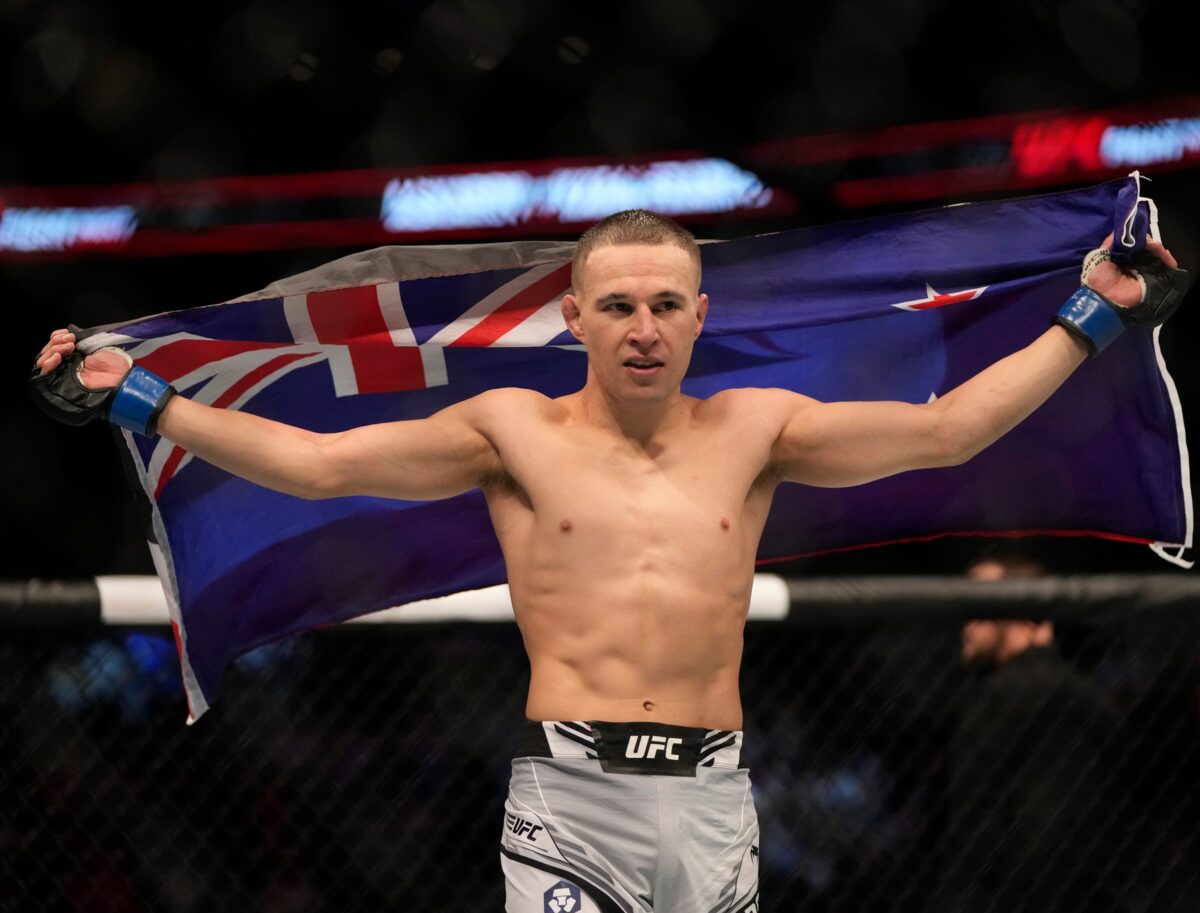
Get to know the nationality and the ethnicity of the upcoming UFC 317 flyweight title challenger Kai Kara-France!

New Zealand has produced some incredible fighters over the years, but few have captured hearts quite like Kai Kara-France. The flyweight warrior carries himself with a quiet dignity that reflects his deep cultural roots. His journey from a bullied kid in Auckland to a top UFC contender tells a story of resilience and self-discovery.

Understanding his background helps explain why he fights with such passion and carries himself with such pride. The man they call ‘Don’t Blink’ represents more than just athletic achievement, he embodies the spirit of his ancestors! He is now set to challenge Brazilian Alexandre Pantoja for the UFC flyweight title.

Kai Kara-France Nationality- Where is Kai Kara-France from?

Kara-France was born and raised in Auckland, New Zealand’s largest city, on March 26, 1993. Growing up in the urban jungle of Auckland meant he was far removed from his ancestral tribal lands. Still, Auckland provided opportunities that might not have existed in smaller communities.

His early years weren’t exactly smooth sailing though. High school at Mount Albert Grammar School brought challenges that many smaller kids face. Bullies targeted him for his size, which ironically pushed him toward the very sport that would make him famous. He started with Brazilian jiu-jitsu at age 10 but took a break after two years. The bullying experience brought him back to martial arts, this time with a more serious mindset.

Education took a backseat when fighting called his name. He enrolled at Unitec Institute of Technology but couldn’t stay focused on traditional academics. The mats were calling louder than the lecture halls. This decision might have worried his parents, but it proved to be the right choice for his future. Not everyone needs a college degree to find their calling in life.

New Zealand’s fighting culture has produced legends like Mark Hunt and Dan Hooker. Kara-France joins a proud tradition of Kiwi fighters who’ve made their mark on the world stage. The country’s rugby culture probably helped shape his toughness and team mentality too. Auckland’s multicultural environment exposed him to various fighting styles and training partners. The city’s diverse population meant he could train with people from different backgrounds and skill sets. This exposure helped develop his well-rounded fighting approach that serves him well in the UFC today.

Kai Kara-France Ethnicity

Kara-France proudly claims Maori heritage through multiple tribal connections. His ancestry links him to four significant iwi (roughly means ‘tribe’ or ‘nation’): Waikato, Ngāti Tūwharetoa, Ngāti Kahungunu, and Tuhoe. These aren’t just names on a family tree. They represent deep cultural traditions spanning centuries. Each iwi has its own history, customs, and spiritual beliefs that shape Maori identity.

His Maori heritage influences more than just his fighting style. The warrior traditions of his ancestors echo in his approach to competition and life. Maori culture emphasizes respect, courage, and connection to one’s roots. The haka war dance that New Zealand’s rugby team performs captures this same warrior spirit. Legends like Mark Hunt, current stars like Tai Tuivasa, and even Hollywood’s Dwayne ‘The Rock’ Johnson share similar ancestral connections. 

(Image Credit: Barbara Perenic/Colu – Imagn Images)

mma mma

I am a dedicated MMA and Boxing content writer at The Playoffs. I was instantly hooked on MMA after watching the fight between Lyoto Machida vs. Gegard Mousasi back in 2014, and since then, i have been an avid writer with a deep love for the sport and its techniques, providing readers with a thorough understanding of the sport. My favorite aspect of working at The Playoffs is the creative freedom it provides. The diverse range of topics, from listicles and SEO to news articles, keeps me engaged and motivates me to continuously improve my skills! I aim to capture the excitement of the combat sports world in my writing, acting as the middleman between fighters and their die-hard fans. It is kind of like a referee, but with words!

Read more