

Virginia’s bid to legalize online casino gaming — often referred to as iGaming — has taken a dramatic turn, surviving a series of razor-thin legislative votes in both chambers of the General Assembly and keeping the prospect of regulated online casinos alive in the commonwealth.
After contentious debates and procedural maneuvers, lawmakers have pushed forward separate Senate and House bills that now must be reconciled before heading to the governor’s desk.
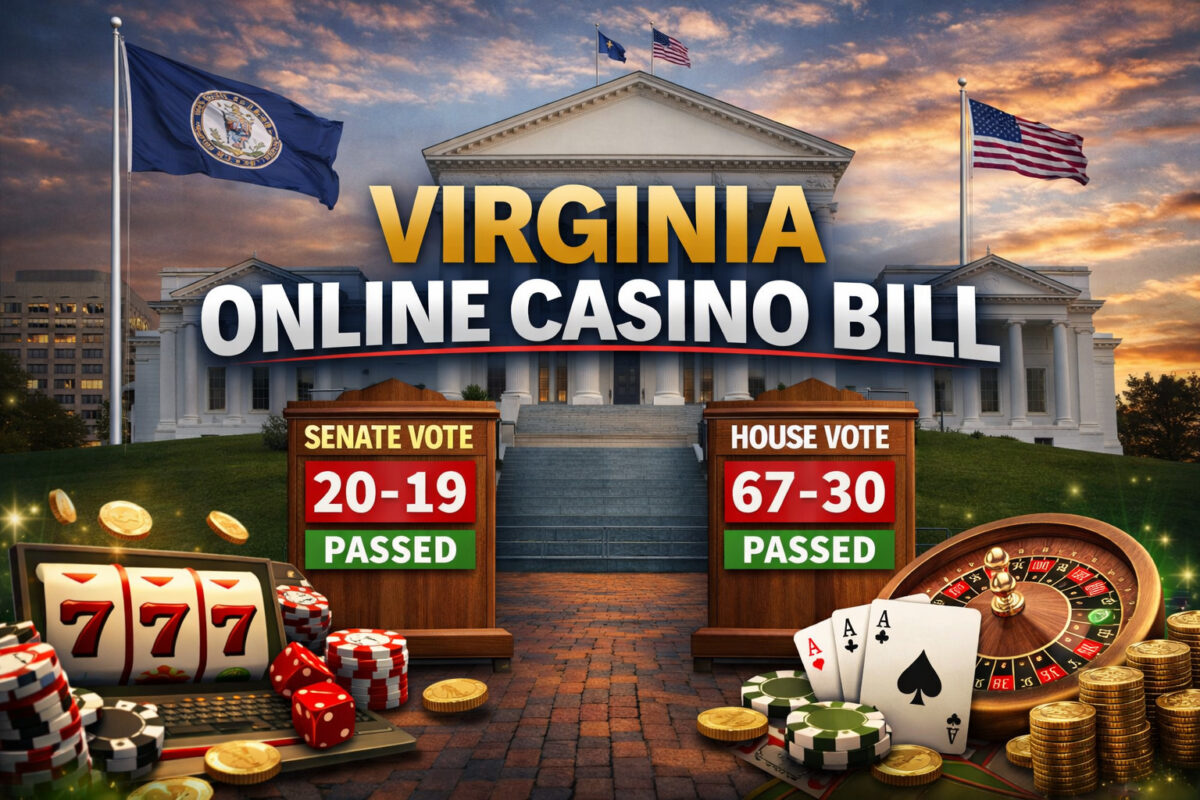
On February 16, 2026, the Virginia Senate initially rejected Senate Bill 118 (SB118) — the primary vehicle for iGaming legalization — in a close 20–19 vote. However, Democratic Senator Schuyler VanValkenberg invoked a procedural move by calling for a reconsideration, effectively reopening the outcome. After the reconsideration motion, three senators who had voted “no” abstained when the bill was re-voted later that day. With those shifts, the bill narrowly passed 19–17 and advanced to the House of Delegates.
The vote highlighted deep divisions among legislators over expanding gambling in the state, with some lawmakers expressing concerns about social impacts and responsible gambling protections, while others emphasized the economic benefits of curbing offshore gambling and capturing revenue already flowing outside regulated channels.
Just one day after the Senate’s dramatic reversal, the House of Delegates also faced a close iGaming vote on House Bill 161 (HB161). The bill initially failed its first vote 46–49, but after a recess and further discussion, the chamber passed the measure on a 67–30 reconsideration vote, allowing the House version to move forward.
Both SB118 and HB161 propose to create a regulated online casino market in Virginia under state oversight, with details that still vary between each chamber’s version. Key provisions under discussion include:
Advocates for legal iGaming argue this expansion would bring millions in new revenue to Virginia’s general fund, support education programs, and provide regulated consumer protections that currently don’t exist in the unlicensed online gambling space. A recent fiscal review projected online casino revenue reaching hundreds of millions annually once mature.
Opponents, including social advocates and some lawmakers, have raised warnings about increased gambling accessibility, addiction risks, and potential cannibalization of existing state lottery and gaming revenues. Debates around responsible gaming measures have shaped amendments and are likely to be central in ongoing negotiations.
With both chambers having advanced their own versions of iGaming legislation, legislators are now expected to negotiate differences in a conference committee to produce a unified bill. Only after this reconciliation and a final vote in both chambers can the measure move to Governor Abigail Spanberger for signature.
If successful, Virginia would join a growing list of states embracing regulated online casino gaming — potentially reshaping the commonwealth’s gaming landscape and modernizing its approach to digital gambling.