

A generation ago, following football meant a Saturday trip to the ground, a radio commentary or a result read out on television. Today the same fan can watch a match on one screen, check live statistics on another and chat with thousands of other supporters in real time. This article looks at how digital platforms have changed the fan experience, what the Premier League has done with its own app, and what readers should keep in mind as the line between fandom and commerce gets thinner. It is informational and is not an invitation to bet.
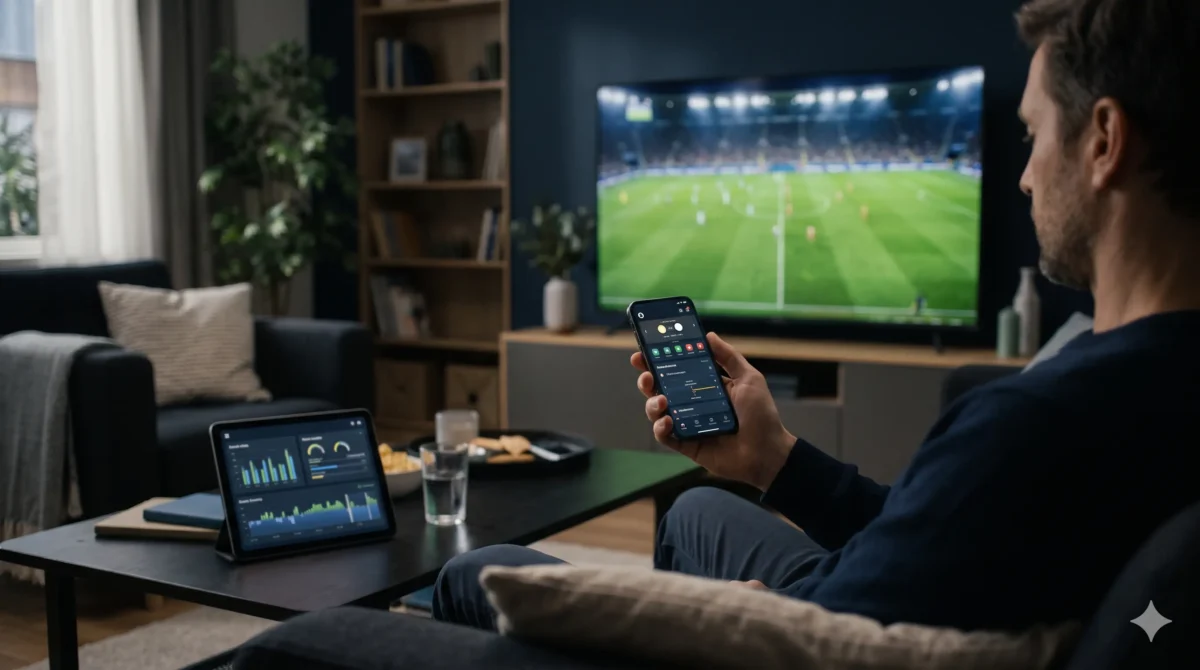
The biggest change is that the match no longer ends at the final whistle, or even begins at kick-off. Fans now follow teams through live score notifications, short video highlights, podcasts and club apps, often all in the same hour. The phone has become a second screen for almost every live broadcast, and for many supporters abroad it is the main way to follow a club at all.
| Fan need | Before | Now |
|---|---|---|
| Live scores | Radio or teletext | Push notifications and live stats |
| Highlights | Evening TV programme | Short clips within minutes |
| Club news | Newspapers | Apps, social media and newsletters |
| Community | Pub or stadium | Online forums and group chats |
| Fantasy games | Paper entries | Mobile apps with live scoring |
The league itself is a good example. In mid-2025, according to Broadcast, the Premier League launched a new app and website built around personalisation, developed through a five-year partnership with Microsoft as its official cloud and AI partner. The reported features include verified live scores and statistics, vertical match stories, alerts shaped around chosen clubs and players, Premier League Radio and Fantasy Premier League.
One feature stands out: an AI assistant, the Premier League Companion, powered by Microsoft Copilot. Broadcast reports that it lets fans explore more than 30 seasons of statistics, 300,000 articles and 9,000 videos. The league’s chief executive, Richard Masters, described the aim as a more personalised digital experience reflecting its global reach.
The shift matters because it changes who talks to the fan. Traditionally, much of the day-to-day relationship with viewers sat with broadcasters. A league-owned app lets the league reach supporters directly, while still linking out to clubs and official broadcasters.
Personalisation sounds simple: you choose your team, and the app shows you more of it. In practice it relies on data about what you watch, read and tap. For fans that brings real benefits, such as relevant alerts instead of noise, but it also means thinking about privacy settings and notification choices. A useful habit is to review which permissions an app asks for and switch off alerts that do not add value.
For readers who want more Premier League talking points, The Playoffs has a piece on unusual Premier League moments.
Football’s digital ecosystem also includes betting, and the same phones that carry club apps often carry bookmaker apps. In Great Britain these are regulated products, and readers who want to see how they compare on features such as design and usability can look at ToffeeWeb’s guide to the best betting Uk apps. It is a feature comparison for British adults, and the terms on each operator’s own site are the ones that apply.
Brand names that fans already know from sponsorship also appear in this space. As one example, ToffeeWeb explains how one well-known bookmaker presents its betfred UK offer to British readers. Offers change often and are for eligible UK customers only, so the page is best read as information about that operator and not as a recommendation.
The tools that make football more engaging can also make it harder to switch off. Notifications arrive at all hours, short clips encourage endless scrolling, and live data can feel like a prompt to act. Sensible habits help: set notification limits, take breaks during matches, and keep any betting separate from the pleasure of following a team. Where betting is involved, use the limit-setting tools that licensed operators offer.
Expect more AI-assisted features, more personalised match stories and closer links between league, club and broadcaster apps. The challenge for the sport is to keep the sense of community that makes football special while adding convenience. For fans, the best outcome is a richer experience that still leaves room for the ground, the pub and the people around you.
This content is for readers aged 18 and over. Gambling can be addictive. Set limits, never chase losses and do not bet money you cannot afford to lose. In Great Britain, free support is available from the National Gambling Helpline on 0808 8020 133. You can also find tools and advice at BeGambleAware.org.
Fans now follow matches through apps, notifications, short clips and online communities, often on a second screen during live broadcasts.
According to Broadcast, it is an AI assistant in the league’s app, powered by Microsoft Copilot, that lets fans explore historic statistics, articles and videos.
It lets them reach fans directly while still linking to clubs and official broadcasters.
Personalisation relies on data about your activity, so review each app’s privacy settings and permissions.
Call the National Gambling Helpline on 0808 8020 133.
For information only, not an invitation to gamble. 18+. Gambling can be addictive. Please gamble responsibly. BeGambleAware.org