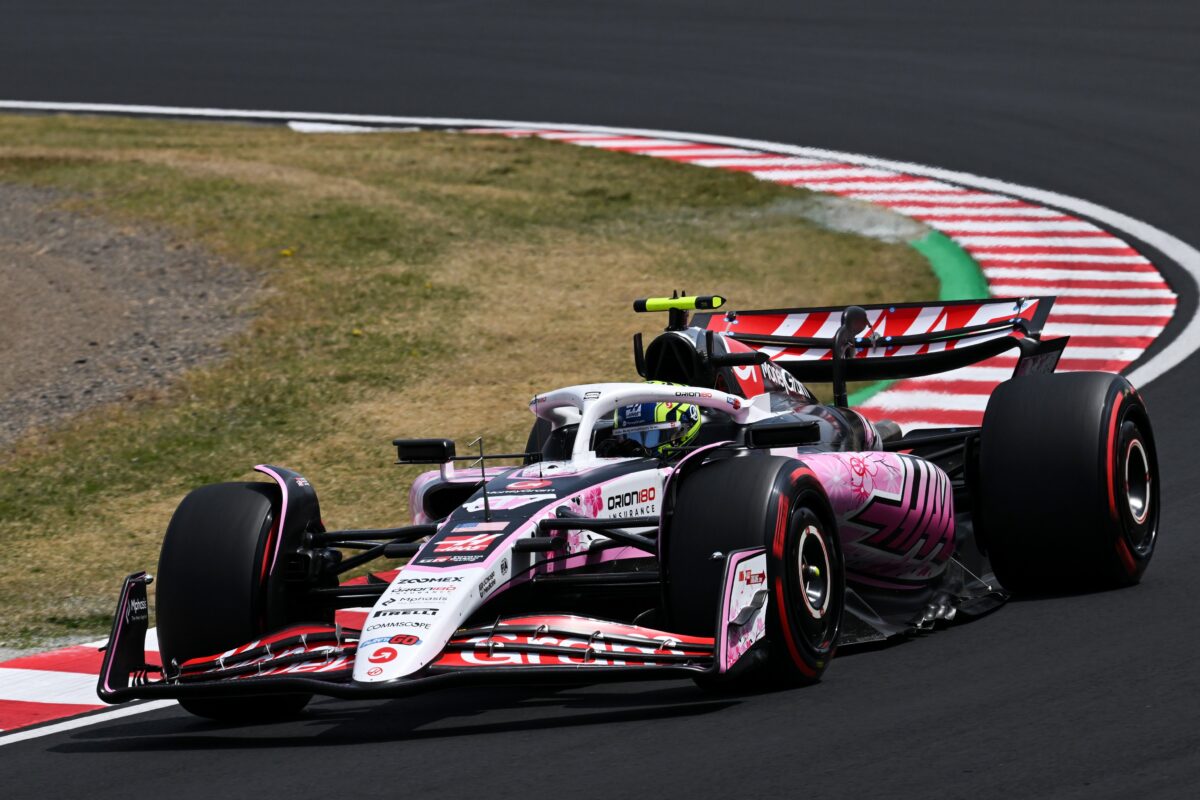
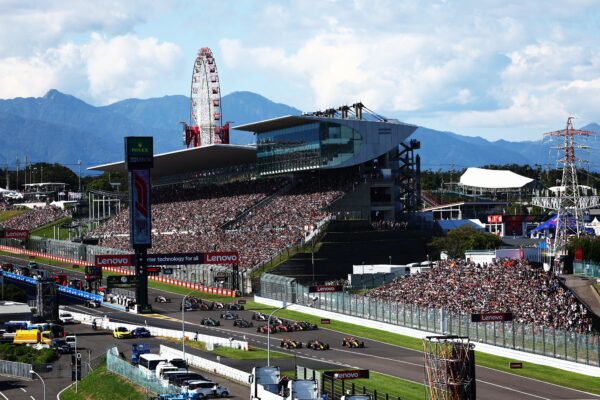
Know more about the implications of rainy weather at the Suzuka circuit in the Japanese GP.
The Japanese GP weather predictions released by FIA before the weekend indicated an 80 percent chance of rain. FIA had predicted that there was a small chance of showers during the race. It’s currently midnight in Japan and the track in Suzuka is already experiencing rain.
The weather prediction indicates that the track will be affected by rain until the start of the race. This weather has the opportunity to bring some unexpected changes. There is still a slight chance that Japanese GP may become a rain swept race in 2025.
Formula 1 races in the rain have a unique flair to them. The same track can yield vastly different results if raced in the rain. The Australian GP was a prime example of this situation. The first race in F1 gave way to one of the most exciting races of the ground-effects era. It is a common notion that rain levels the playing field of Formula 1. Let’s have a look at how the Japanese GP weather can affect the race tomorrow.
Anyone packed an umbrella? ☔️
— Formula 1 (@F1) April 4, 2025
Here's the forecast for the rest of the weekend in Japan 🇯🇵#F1 #JapaneseGP pic.twitter.com/7vPrFOToV5
As mentioned previously, rain during races can change the results dramatically. In a track like Japan, it has many effects all together. The Japanese GP may face both positive and negative effects due to rain. The race has been plagued by random fires throughout the Free Practice sessions. A little bit of rain before the start of the race will curb this effect. This will prevent any unnecessary red flags and interruptions during the race. A wet track also produces much more exciting racing action. Drivers need to work at their pace carefully and manage cold tires while trying to defend or attack. The teams also need to strategize accordingly, taking into account the track conditions in various sectors.
Red flag deployed 🔴
— Formula 1 (@F1) April 4, 2025
A small grass fire beside the circuit is currently being extinguished#F1 #JapaneseGP pic.twitter.com/OomAusRYH5
But, when Formula 1 races at Suzuka in the rain, it faces a huge problem. We have discussed earlier how Suzuka is an inherently fast track. The dangerous 130R can become a crash prone zone for new drivers. Unfortunately, rain at Suzuka has led to one of the biggest tragedies of F1. Jules Bianchi, who was Charles Leclerc’s godfather, lost his life during the 2014 Japanese Grand Prix sustaining injuries from a horrific crash. Similarly, in 2022, Pierre Gasly faced a life or death situation during rainy conditions in the race.
When we talk about race results, Max Verstappen has the highest chance of winning the race. He has won at Suzuka for three years consecutively since 2022. Even though, his Red Bull does not carry enough speed, Max Verstappen can defeat the field using the rainy conditions and wet track. Lando Norris and Oscar Piastri have struggled to maintain their pace in the rain. They will be at a disadvantage if Verstappen end up creating a gap to them in the early stages of the race.

In case of rain before the race, teams may go for a unique strategy. This involves using intermediate tyres to displace water off the track and create a dry racing line. Once, a racing line has been created, teams start switching to slicks in order to manimise the race pace of their cars. This way, the Japanese GP weather can lead to a cut-throat strategy where every team would try to get the best out of the racing line on a wet track. Drivers will have to keep tyre temperatures optimal during the race or they may face a loss of grip.
If rain fails in middle of the race, a different protocol will be executed for the Japanese GP. In case of light rain, teams will start pitting for the intermediate tyres. However, heavy rainfall can cause a red flagged session. The cars will lap the circuit under safety car conditions in order to determine the feasibility of racing in rain. The new generation of Formula 1 cars depend on ground effects and they have a tendency to disrupt vision of the drivers behind them. This can cause a long red-flagged session and may lead to shortening of the race distance.
nhl I work as a Writer at The Playoffs specialising in NHL, Formula 1 and Motorsports. I got into online journalism a couple of years ago. I used to be an intern for a website managing their Formula 1 content and then I served an entire year as a contractual writer.
Read moreFor me, online journalism was not something I expected. I am a Mechanical Engineer aiming to join Formula 1. At the same time, I am a poet, writer and my university’s Literary Club Lead. One day the dots connected together and I realised I could use my writing skills to convey my passion for Motorsports.
The biggest aspects I love about my role are- Scuderia Ferrari and Sebastian Vettel. When I am not fawning over them I like to convey my opinions to the public, in a manner which helps them gain a new point of view. I love helping people explore new ideas about Motorsports and obviously get recognised as a writer all over the world.
Message to Readers: I promise you one day you’ll see me managing operations on track with a Formula 1 team ; )
We use cookies for ads and to improve your experience. By continuing on the site, you agree to our Privacy Policy. Read more about it