Picks
Sportsbooks
Casino
Promos
Prediction Markets
Lottery
Guide
NFL NFL
Picks Sportsbooks Casino Promos Prediction Markets Lottery Guide
Gambling is prohibited for underage individuals | Commercial content | Regional restrictions may apply | T&Cs apply | Play responsibly

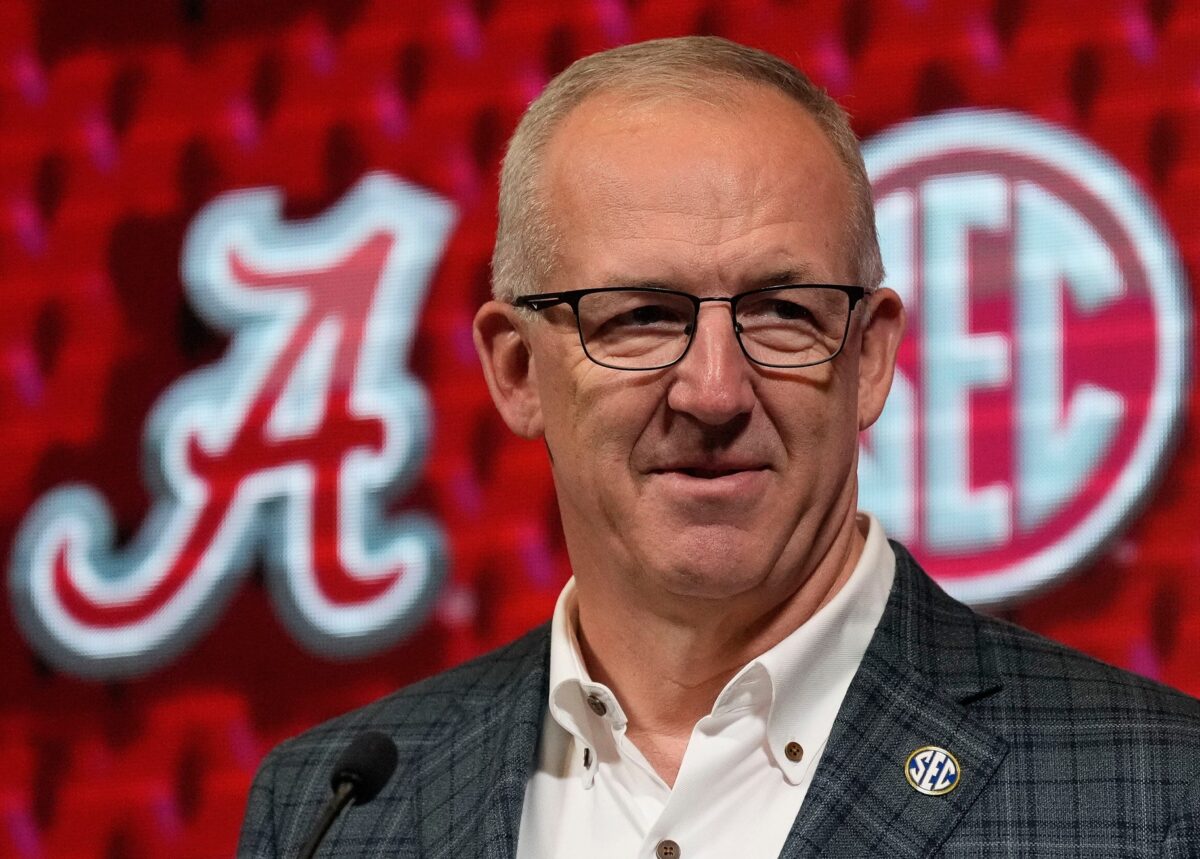
Greg Sankey and Tony Petitti push for CFP seeding overhaul as SEC and Big Ten tighten grip on playoff format

Natasha Bose

SEC, Big Ten demand CFP seeding changes for 2025.

Greg Sankey and Tony Petitti want the College Football Playoff (CFP) seeding system changed—immediately. The SEC and Big Ten commissioners made that clear during their joint meeting with athletic directors on Wednesday.

The problem? The 12-team format, introduced last season, hands the top four seeds and first-round byes to the highest-ranked conference champions. That created a mess. Ninth-ranked Boise State (Mountain West champion) locked in at No. 3, and 12th-ranked Arizona State got No. 4. Meanwhile, Texas (No. 3) and Penn State (No. 4) got stuck at No. 5 and No. 6 simply because they didn’t win their conferences.

“I’m prepared to vote for seeding change, but it has to be unanimous,” Sankey said.

The fix is obvious: Rankings should determine seeding. Petitti is all in on that idea.

“We’re in favor of going to a straight seeding, where there’s no difference between rankings and seeding like we had this year,” he said. “We’re in support of that for next year.”

The new proposal keeps automatic bids for the top five conference champions but eliminates the outdated rule that guarantees them the best seeds. Instead, the CFP selection committee’s rankings would dictate seeding and byes. That also means Notre Dame, which doesn’t belong to a conference, could secure a first-round bye if ranked high enough.

But Sankey and Petitti can’t push this through alone. Every FBS commissioner and Notre Dame athletic director Pete Bevacqua must sign off before any change takes effect.

The SEC and Big Ten will decide the future of the College Football Playoff—and the rest of college football will have to follow

Greg Sankey and Tony Petitti run the two richest, most powerful conferences in the sport. The SEC and Big Ten control media rights, playoff revenue, and influence over the CFP. And when ESPN’s new contract kicks in after 2025, that power will only grow.

That’s why this meeting mattered. It wasn’t just about next season—it was about reshaping the playoff for years to come.

A 14-team CFP is on the table for 2026. Sources across both conferences have pushed for it, with a format that would guarantee:

  • 4 SEC teams
  • 4 Big Ten teams
  • 2 Big 12 teams
  • 2 ACC teams
  • 1 highest-ranked Group of 5 champion
  • 1 at-large spot (likely for Notre Dame if it qualifies)

The Big Ten has been more aggressive about securing automatic bids, while the SEC has been open to multiple structures. Sankey wouldn’t confirm details, but he acknowledged discussions are ongoing.

“This is not a new issue,” Sankey said.

Petitti made it clear the SEC and Big Ten will ultimately shape the playoff’s future.

“The process going forward, if we decide to make changes, contemplates that the structure of that is led by the SEC and the Big Ten,” he said.

Meanwhile, Sankey wants more clarity on how the CFP selection committee values conference titles and strength of schedule. Right now, the decision-making process is inconsistent, and he’s not happy about it.

“We entrust them with that work, but there are domino effects from those selection decisions,” he said.

Petitti agreed that the system needs work.

“I believe the committee was doing the work that was set in place,” he said. “… Overall, that system that is taking place is part of the ideas we’re raising about the process for next year because that would give the committee more flexibility to do the job in a way that’s much clearer for fans.”

Beyond the CFP format, Sankey and Petitti also discussed NCAA governance and the House vs. NCAA settlement. With legal battles looming, attorneys for both conferences attended the meeting to ensure compliance with NCAA regulations.

“The work that’s been done around the settlement among the conferences is probably unprecedented in terms of the amount of collaboration that’s required to get this right,” Petitti said.

Sankey closed the meeting with a reminder: The SEC and Big Ten may have the most power, but they aren’t operating in a vacuum.

“Moving forward, Tony described a methodology that was agreed to by everyone a year ago for how decisions will be made by everyone—not dictated by us—agreed to by everyone,” he said. “We have a responsibility to use that wisely.”

Translation? The SEC and Big Ten are running the show, but they’ll make sure it looks like a group decision.

Image: Imagn Images

I write about sports because, well, it brings in the big bucks! I’m not some lifelong analyst or stats guru, truth being told, you’ve probably never heard of me!—I just know how to research, write, and make things sound good. That’s the job!
Got into sports media the same way most people do: by (fortunate) accident. Started with SEO writing, took on a few sports gigs, and now here we are! I cover games, trades, player drama—whatever needs words.
Favorite part? The chaos. One day it’s a blockbuster trade, the next it’s a goat running onto the field. Never boring.
Message to readers: If you want deep analysis, there are people for that. If you want sharp, no-BS writing that actually makes sense, stick around.

Read more