

The Golden State Warriors start the 2025–26 season with a roster mixing aging stars and rising talent. Stephen Curry and Draymond Green remain central, while Jimmy Butler, Al Horford, and Buddy Hield add veteran depth. Younger players like Brandin Podziemski, Moses Moody, and Trayce Jackson‑Davis are expected to carry more responsibility.
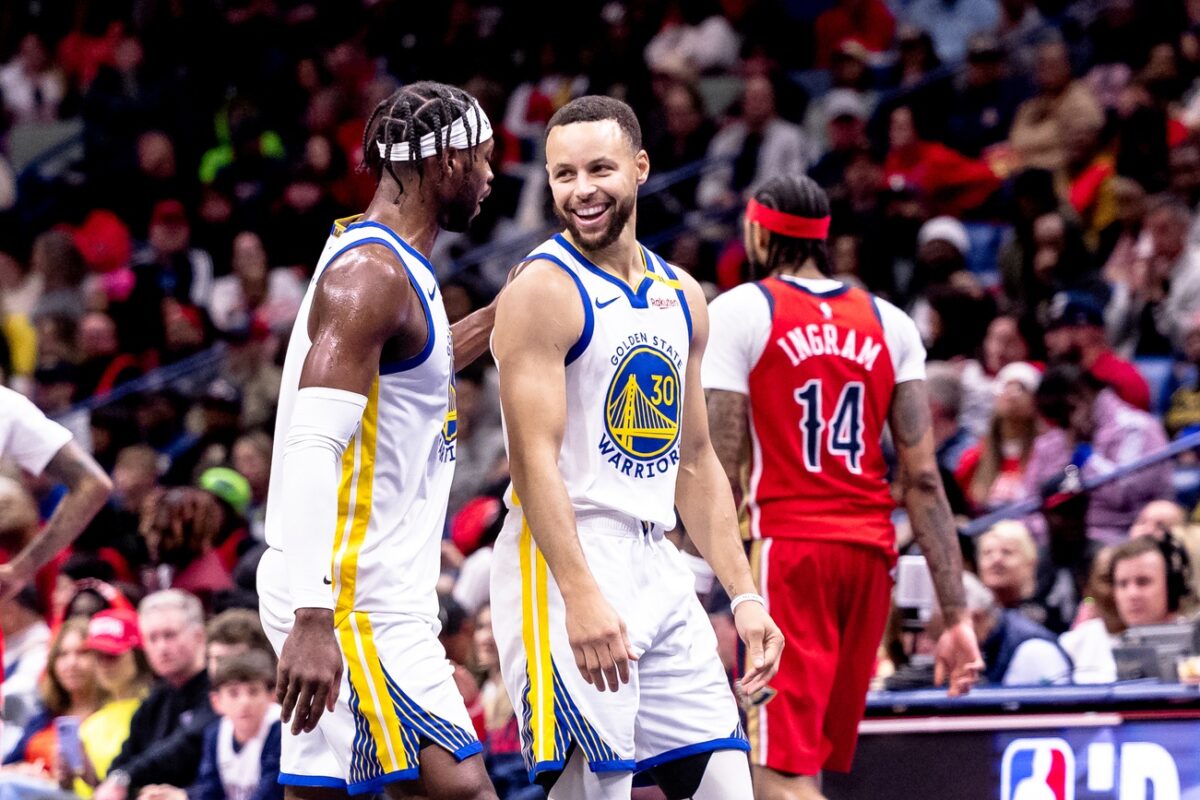
Stephen Curry: At 37, Steph Curry is still the heartbeat of Golden State’s offense. While his athleticism has naturally declined, his shooting remains elite, and he continues to bend defenses with his fluidity. The Warriors are carefully managing his minutes to preserve him for the postseason, but he’s still capable of explosive scoring nights. His leadership and ability to orchestrate the offense make him indispensable, even as the franchise transitions toward younger talent.
Brandin Podziemski: Entering his third NBA season, Brandin Podziemski has grown into a reliable secondary playmaker and shooter. His basketball IQ and willingness to rebound from the guard spot have earned Steve Kerr’s trust. He’s expected to take on more responsibility this year, especially when Steph Curry rests, and his development is crucial for the Warriors’ long‑term backcourt stability. Podziemski’s versatility allows him to play both guard spots effectively.
De’Anthony Melton: Melton was brought in to bolster perimeter defense and provide another ball‑handling option. After missing significant time with an ACL injury, he’s working his way back into form. When healthy, he’s a disruptive defender who can guard multiple positions and hit open threes. His ability to pressure opposing guards could be vital in playoff matchups, though his offensive consistency remains a question.
Pat Spencer: A two‑way contract guard, Pat Spencer is more of a depth option but has impressed with his work ethic and adaptability. He’s unlikely to see heavy minutes in the regular rotation, but his ability to step in as a steady ball‑handler gives the Warriors insurance. Expect him to split time between Golden State and Santa Cruz, where he can continue refining his game.
Moses Moody: Entering his fifth season, Moses Moody looks ready for a bigger role after thumb surgery restored his shooting form. A preseason calf strain slowed him, but Steve Kerr trusts him as a floor‑spacer and versatile defender in the main rotation.
Buddy Hield: Hield’s role as a sharpshooting wing is straightforward but vital. His ability to stretch defenses with deep range provides spacing for Steph Curry in Golden State’s system. While defense has never been his strength, his shooting gravity forces opponents to adjust. Kerr has leaned on him as a bench scorer, and his veteran presence stabilizes second‑unit lineups that otherwise lean heavily on younger, less proven players.
Gary Payton II: Re‑signed this offseason, Gary Payton II remains the Warriors’ defensive specialist. At 32, he’s still one of the league’s best perimeter disruptors, guarding multiple positions. His energy and hustle off the bench are vital, even if his offensive contributions are limited.
Gui Santos: The Warriors exercised their 2025–26 option on Gui Santos, signaling belief in his development. The 23‑year‑old Brazilian forward brings athleticism and versatility, carving out minutes as a high‑energy role player. He’s still raw, but his rebounding and hustle stand out.
Jimmy Butler: Butler brings toughness, leadership, and playoff experience to a Warriors team balancing veterans and youth. While his scoring has dipped slightly, he remains a reliable two‑way presence who thrives in clutch moments. The Golden State Warriors will manage his minutes carefully to preserve him for the postseason, but his ability to defend wings, create offense, and mentor younger players like Kuminga and Moody makes him invaluable in this transitional roster.
Jonathan Kuminga: Kuminga’s athleticism and defensive versatility remain his calling cards, but consistency is still the hurdle. Entering his fifth season, he’s shown flashes of scoring aggression and improved rebounding, yet Steve Kerr continues to push him to refine decision‑making. With Jimmy Butler easing into a lighter workload, Jonathan Kuminga has a chance to claim more minutes at the three and four. His development is critical for the Warriors’ long‑term competitiveness and lineup flexibility.
Moses Moody: Though listed primarily as a shooting guard, Moses Moody’s size and shooting allow him to slide to the three. His improved confidence as a catch‑and‑shoot threat makes him a valuable floor‑spacer alongside Steph Curry and Podziemski. Defensively, he’s capable of guarding wings, though lateral quickness can be tested. With Butler’s age and Kuminga’s inconsistency, Moody’s steady presence could earn him a larger role than expected in Golden State’s rotation this season.
Alex Toohey: Drafted 52nd overall in 2025, Alex Toohey signed a two‑way contract after impressing in Australia’s NBL. At 6’8”, he brings size, rebounding, and defensive instincts, though his shooting remains inconsistent. The Warriors see him as a developmental forward who can eventually provide depth at both forward spots. Expect him to spend significant time with Santa Cruz, but his physical tools and international experience make him a long‑term project worth monitoring.
Jackson Rowe: Rowe, a Canadian forward on a two‑way deal, has taken a long path through Europe, Canada, and the G League before landing with Golden State. At 6’7”, he offers rebounding, hustle, and defensive versatility. While not a polished scorer, his energy and willingness to do the dirty work have earned him looks in preseason. He’s unlikely to crack the main rotation consistently but provides depth and insurance at forward.
Draymond Green: Draymond Green remains Golden State’s defensive anchor and leader. His playmaking from the four spot still drives Steve Kerr’s system. While his scoring is minimal, his versatility, toughness, and ability to guard multiple positions keep him indispensable.
Jimmy Butler: Butler often slides up to power forward in small lineups. At 36, his physicality and defensive instincts allow him to battle bigger forwards. The Warriors will manage his minutes, but his toughness and playoff experience remain invaluable.
Jonathan Kuminga: Kuminga’s athleticism makes him a natural fit at the four. He thrives in transition and as a slasher, though his role remains inconsistent. Steve Kerr wants him to defend and rebound more consistently to earn heavier rotation minutes.
Al Horford: At 39, Al Horford brings veteran savvy, floor spacing, and defensive positioning. His shooting stretches defenses, and his leadership stabilizes younger teammates. Though minutes will be managed, his presence gives Golden State a reliable option against bigger frontcourts.
Gui Santos and Jackson Rowe: Santos provides athleticism, rebounding, and defensive versatility, carving out minutes as a high‑energy forward still refining his offensive game. Rowe, on a two‑way deal, offers hustle, toughness, and depth. Together, they represent developmental pieces adding grit and flexibility to Golden State’s rotation.
Al Horford: Al Horford gives Golden State reliable spacing, disciplined rim protection, and elite positioning. His pick‑and‑pop threat widens driving lanes, while his communication organizes team defense. Minutes will be managed, but his calm decision‑making and screening elevate lineups featuring Curry and shooters. Horford’s leadership helps optimize late‑game execution against bigger, physical frontcourts.
Draymond Green: Green remains the player switching across positions, leading backline rotations, and igniting the offense as a short‑roll passer. He closes many games at the five when Golden State prioritizes speed and versatility. While scoring is secondary, his screening angles, handoffs, and defensive anticipation transform pace and spacing. The staff will balance his workload to preserve peak impact in high‑leverage minutes.
Trayce Jackson‑Davis: Trayce Jackson‑Davis brings vertical spacing, rebounding, and paint defense, thriving as a rim‑runner in simplified pick‑and‑roll lineups. Continued growth on defensive reads, free throws, and quick decisions on short rolls, will determine whether he secures consistent rotation minutes behind Al Horford and in matchup‑driven lineups.
Quinten Post: Quinten Post offers a modern stretch five profile with size, touch, and a confident perimeter jumper that keeps the lane clear. He competes on the glass and shows progress in positioning and help responsibilities. Offensively, his pick‑and‑throw timing and pump‑and‑drive counters are valuable. If defensive consistency holds, he can toggle between bench spacing minutes and starts when injuries or matchups demand.

 nba
nba  nfl
nfl  wnba
wnba 
 Washington Wizards
  Charlotte Hornets
  Philadelphia 76ers
  Brooklyn Nets
  Toronto Raptors
  Miami Heat
  Chicago Bulls
  Atlanta Hawks
  Orlando Magic
  Detroit Pistons
  Milwaukee Bucks
  Indiana Pacers
  New York Knicks
  Boston Celtics
  Cleveland Cavaliers
  Utah Jazz
  New Orleans Pelicans
  San Antonio Spurs
  Portland Trail Blazers
  Phoenix Suns
  Dallas Mavericks
  Sacramento Kings
  Memphis Grizzlies
  Golden State Warriors
  Minnesota Timberwolves
  LA Clippers
  Denver Nuggets
  Los Angeles Lakers
  Houston Rockets
  Oklahoma City Thunder
  NBA
NBA