

How France’s strict yet structured gambling rules are reshaping the industry
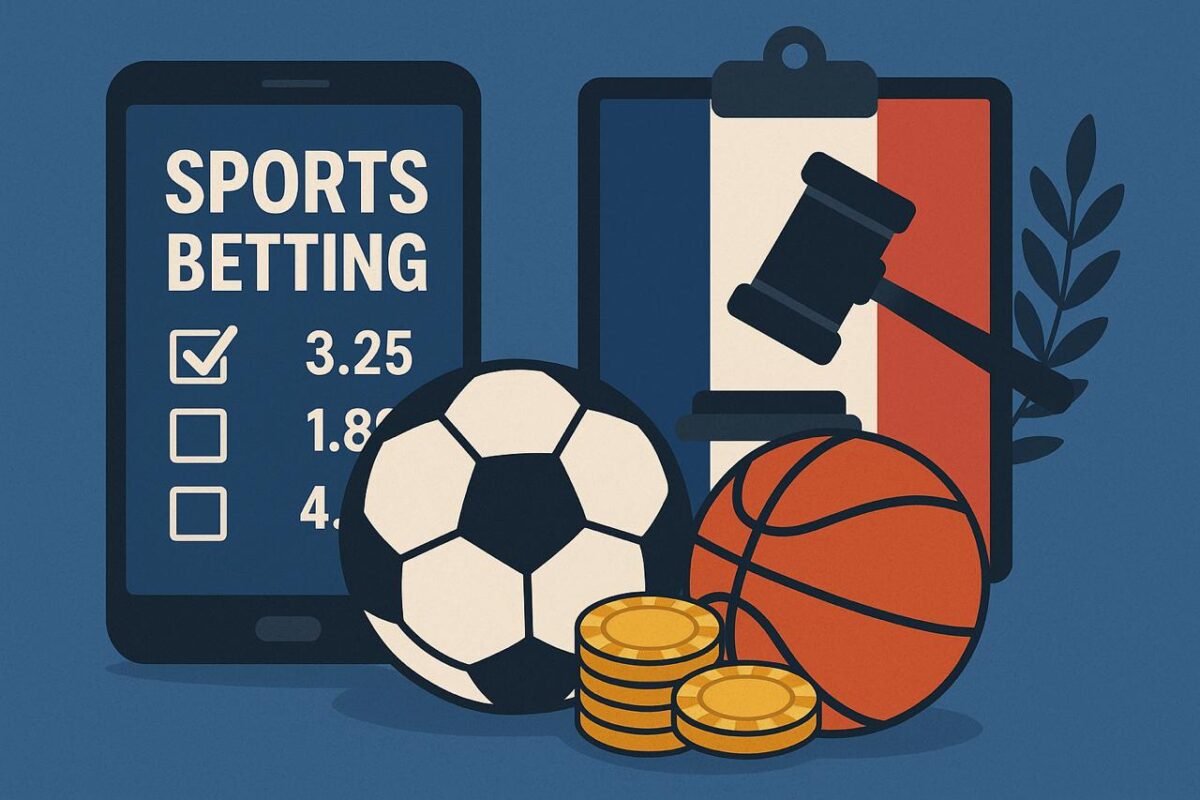
The French sports betting market has long been one of Europe’s most carefully regulated arenas, a balance between protecting players, encouraging responsible gambling, and maintaining a competitive environment for operators.
Over the past decade, a series of regulatory reforms has dramatically changed how sports betting works in France, influencing not only operators and bettors, but also the sports ecosystem itself.
Until 2010, betting in France was dominated by state monopolies such as Française des Jeux (FDJ) and PMU. That changed with the Law No. 2010-476 of May 12, 2010, which opened the door for private operators to enter the online betting scene under strict licensing conditions.
This landmark legislation gave birth to a new regulator: ARJEL (Autorité de Régulation des Jeux en Ligne) and years later, its successor, ANJ (Autorité Nationale des Jeux), was established in 2020. The ANJ today serves as the backbone of French gambling oversight, ensuring that sports betting remains fair, transparent, and safe for consumers.
In short, France went from a tightly controlled monopoly to a regulated but open marketplace. The goal was simple: create a competitive industry while protecting bettors from the darker sides of gambling.
French gambling law is known for being both progressive and conservative, progressive in its openness to competition, but conservative in its limits. For instance, online casino games remain illegal, but sports betting, horse racing, and poker are allowed under license.
Operators must comply with strict advertising standards, a maximum return-to-player rate, and tax contributions that are among the highest in Europe. According to CMS Law’s guide on gambling regulation in France, these rules are designed to prevent excessive gambling and ensure long-term industry sustainability.
Another key distinction lies in the ANJ’s control over marketing. The regulator has the authority to limit the volume, content, and tone of betting ads, especially those targeting younger audiences. Recent proposals even aim to restrict gambling promotion among the 18–25 demographic, according to SiGMA World.
This balance between openness and protection is the heart of the French model, and it’s what makes it a reference point for regulators across Europe.
The French sports betting industry has grown steadily since the 2010 liberalisation. Major operators like Betclic, Winamax, and Unibet have all found space to thrive, but not without challenges.
The cost of compliance in France is high. From identity verification (KYC) to anti-money-laundering checks and advertising approvals, every step comes with a price tag. Taxes on both stakes and gross gaming revenue (GGR) also eat into margins, as highlighted by iGamingBusiness.
Still, the trade-off is stability. Players trust licensed operators, and the legal clarity helps prevent the rise of grey-market platforms.
For everyday bettors, the system offers several protections. Licensed sites are required to promote responsible gambling tools, including deposit limits, self-exclusion options, and spending trackers. Players can even request permanent exclusion from all French-licensed sites through the ANJ’s central registry.
At the same time, however, bettors might find fewer promotional offers or lower odds compared to less-regulated markets. The return-to-player cap means operators can’t simply outspend each other with generous bonuses. It’s a safer, but slightly less lucrative, betting environment.
If you want to explore how top bookmakers are adapting to these rules, check out our feature on Bet365’s potential return to France before the World Cup .
The ANJ also plays a central role in protecting the integrity of sports. Working closely with French sports federations, it monitors suspicious betting activity and imposes restrictions on certain types of bets, particularly those vulnerable to match-fixing.
This oversight ensures that sports and betting coexist responsibly. However, it also impacts sponsorships: clubs and leagues must ensure their partnerships with bookmakers comply with strict transparency rules. The result is a cleaner but more regulated commercial landscape.
Here are a few of the recognised French sports-betting operators (licensed, active in France):
These operators are adapting to the French regulatory environment: compliance, verified accounts, advertising restrictions, etc.
Brazil represents a major emerging market for sports betting — large population, high sports interest (especially in football), and until recently a loosely regulated environment. It offers a useful comparison for how regulation changes industry dynamics.
| Feature | France | Brazil |
| Legal framework maturity | Long-standing (since 2010) with stable regulator ANJ | Recent (2023 law + regulation taking effect 2025) |
| Scope of licensed products | Sports betting, horse racing, poker; casinos largely banned online | Sports betting (fixed-odds) now regulated; online casinos being debated |
| Player protections | Age 18+, KYC, advertising limits, protecting minors | Similar protections in law: age limits, licensing, localisation of data |
| Operator cost/entry | Licensing cost + tax + compliance burden, but established market | High entry cost (BRL 30 m fee), local presence required; regulatory risk still forming |
| Market transparency & trust | Robust: licensed, regulated, oversight by ANJ | Emerging: regulatory regime still early; operators/advice still adapting |
Brazil’s model shows how a major market can move from loosely regulated to strongly regulated — and it highlights that high cost of entry, strong controls, and local presence are typical of mature jurisdictions.
Despite its stability, the French model faces significant challenges. The high tax burden may discourage smaller operators from entering the market. The limited product range, with casino games still banned, restricts potential growth. And as digital entertainment evolves, regulators must find ways to integrate emerging trends like eSports betting within existing laws.
There’s cautious optimism, though. Many experts, such as those quoted in SDLCCorp’s guide to French betting regulation, see France as a model for responsible yet profitable gambling.
If you’re curious how betting site adapt to these standards, take a look at our Best Sports Betting Site in France guide.
In the end, France’s sports betting framework is both a success story and a cautionary tale. It proves that strict regulation can create a safe and stable betting environment, but also shows the tension between protection and innovation.
For bettors, it means more security. For operators, it means more compliance. For the government, it means higher transparency, but also the constant challenge of keeping pace with a fast-moving digital market.
As France prepares for major sporting events like the 2026 World Cup, the pressure to modernise while maintaining control will only grow. The French approach may not be perfect, but it remains one of the most influential gambling models in the world, one that many other nations are now studying closely.