Picks
Sportsbooks
Casino
Promos
Prediction Markets
Lottery
Guide
Tennis
Picks Sportsbooks Casino Promos Prediction Markets Lottery Guide
Gambling is prohibited for underage individuals | Commercial content | Regional restrictions may apply | T&Cs apply | Play responsibly

“A Good Legacy We’re Leaving Behind” – Rafael Nadal Talks About Big Three Era, Influencing Rivalries, and Closure in Retirement

Rudra Dubey

Rafael Nadal discusses respect and acceptance in a thoughtful post-career reflection.

Rafael Nadal returned to Movistar+ this week, sitting down with Jorge Valdano on “Universo Valdano,” where he reflected on how the Big Three shaped modern tennis and how retirement has settled into his life. The conversation offered rare clarity on why the era mattered and how it influenced Carlos Alcaraz and Jannik Sinner, among others. Now it has been a year since the King of Clay’s retirement and he sounds just as thoughtful and grounded as before. Let’s delve deeper. 

The Big Three’s Rivalry, Respect, and Influence 

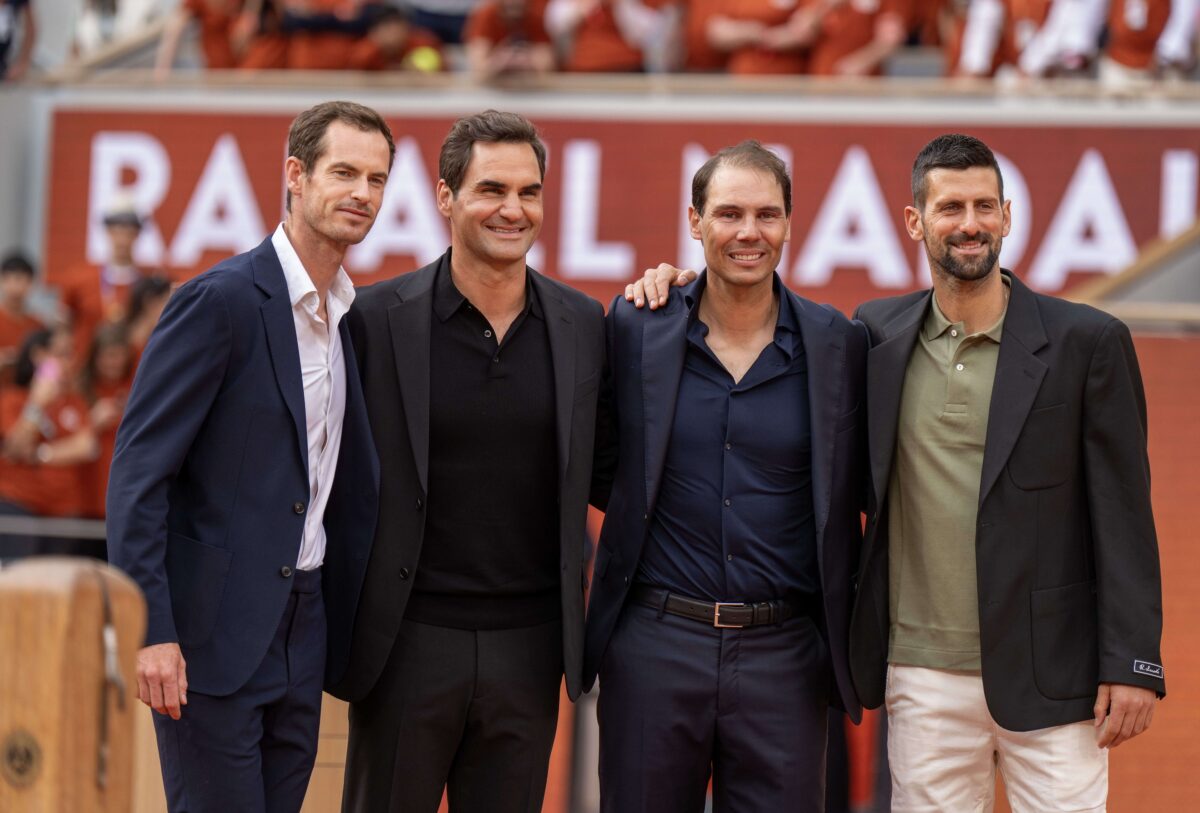
Nadal acknowledged that intensity evolves with age, but he believes the defining legacy of his era lies in how competition was handled. “You go through phases. When you’re younger, you experience everything more intensely,” he told Valdano. With time came space to appreciate what he, Roger Federer, and Novak Djokovic built together. 

He continued, “Over the years, things soften. The positive thing about our era is that we’ve finished our careers and can go out to dinner together without any problem. This is something to be proud of. We competed for the biggest titles, but we didn’t take it to extremes. The rivalry stayed on the track, and our personal relationships were always based on respect, admiration, and even a certain friendship with our rivals. I’m happy to have been a part of this story.”

For Nadal, the example they set continues to echo through the locker room. “Without taking anything away from Sinner and Alcaraz, who want to do things right, I think we [the Big Three] have helped new generations understand that you can be a fierce competitor without hating your rival. You can have a relationship that isn’t necessarily friendship, but it’s still a good one. It’s a good legacy we’re leaving behind.”

He also explained how their internal competitive pressure fueled historic results. “We came after [Pete] Sampras, who had 14 Slams. We, being three, not two, never had room for relaxation. The demand was maximum. We never stopped pushing each other. There was no margin to skip tournaments. That’s the greatness of our era.” Even as the sport evolves toward harder hitting and bigger serving, Nadal remains loyal to instinctive play. “I still believe in intuition, not playing like a robot trying to guess from stats. I discussed this with Federer, and he didn’t like having too much information.”

Accepting Retirement With Conviction

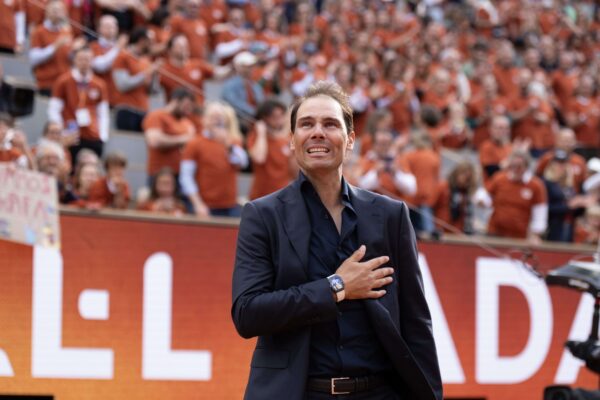
When the topic shifted to the end of his career, Nadal spoke without hesitation. “Tennis has been what I’ve dedicated myself to fully. I was prepared because I explored all real options I had to continue competing at the level I would have liked gave me the conviction and peace to finish in peace (…) the tank was already empty.” It was not resignation, but closure rooted in realism.

The interview revealed a man grateful for what was shared, proud of the culture he helped shape, and comfortable with life beyond competition. Nadal’s story now belongs partly to history, but his influence is still unfolding on court.

Mandatory Image Credit: Susan Mullane-Imagn Images

nfl nfl
mma mma

I’m an academic turned sports writer from Raipur, India, specializing in the NFL, MMA, and tennis at The Playoffs. I previously wrote for Sportskeeda and hold a B.A. and M.A. in History. My journey into sports media began far from the field, rooted in the arts and sciences. Funny enough, I didn’t grow up a sports fan; I used to see it all as just noise. But a fateful writing job introduced me to the world of sports, and what began as a gig quickly became a passion. I understood those voices aren’t noise; they’re emotions of true sports fans, and now I am one of them, writing with the same energy I once questioned.

Read more