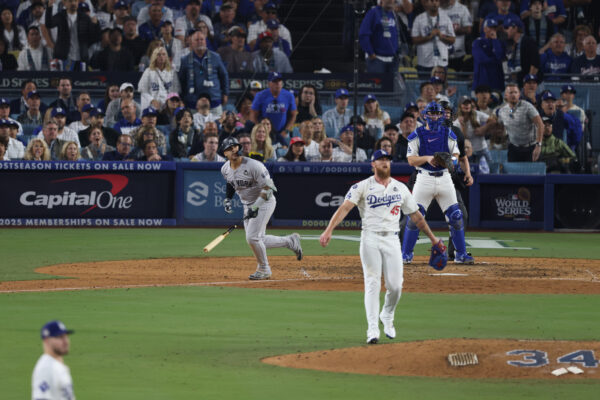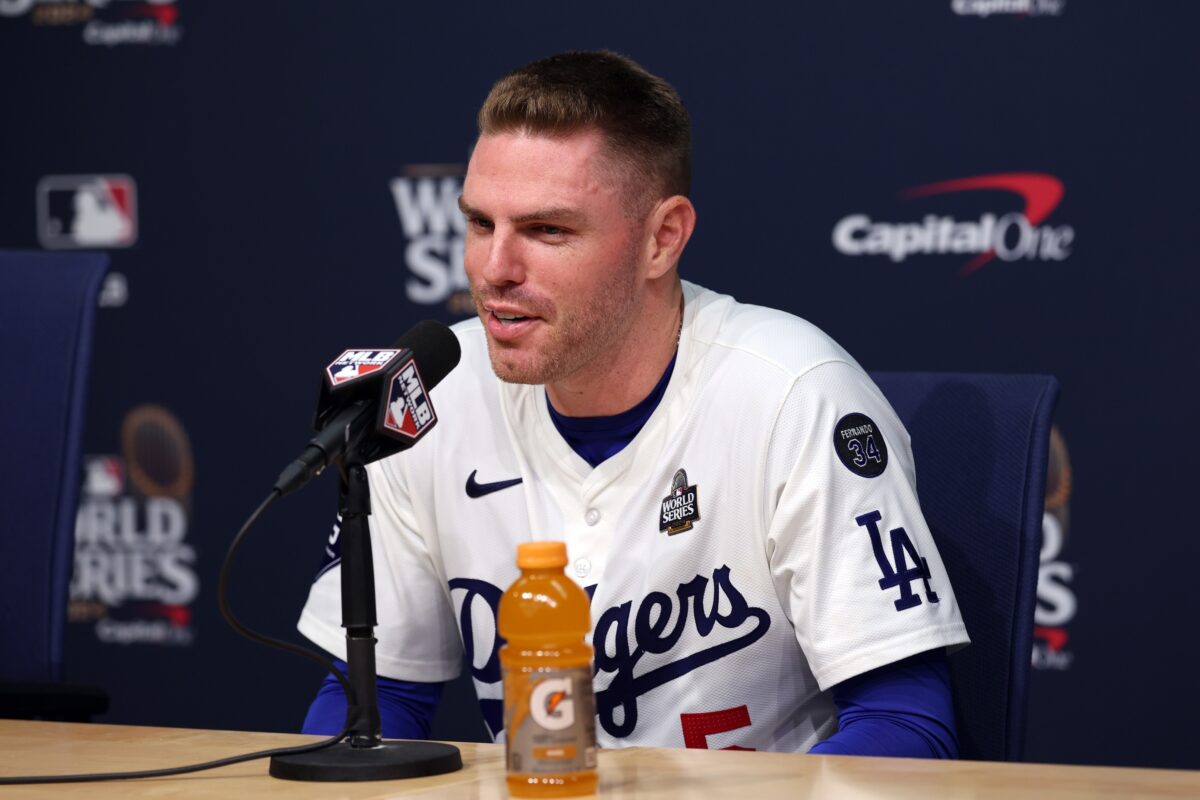


Freeman’s walk-off grand slam sent the Dodgers surging past the Yankees in extra innings, setting the tone for an intense World Series.
Freddie Freeman lifted his bat high, watching as the ball soared through the sky.
It was a historic night in the World Series as Freddie Freeman delivered the first-ever walk-off grand slam in Series history, a thrilling conclusion that took place after the game stretched into extra innings.
Freeman, playing through a lingering ankle injury from late in the regular season, struggled to hit with power during both the NLDS and NLCS, even sitting out some games to rest. But on Friday, he broke through dramatically, hitting both a grand slam and a triple.
The moment brought back memories of Kirk Gibson’s iconic walk-off home run from Game 1 of the 1988 World Series. Like Freeman, Gibson was visibly hindered by an injury, yet rose to the occasion with a game-defining homer.
The Yankees had initially pulled ahead in the 10th, with Jazz Chisholm Jr. breaking out of a playoff slump. After a sharp single off Blake Treinen, Chisholm stole two bases, scoring on a groundout to give the Yankees a brief lead.
Freddie Freeman’s homer came off the first pitch he faced — a fastball from Nestor Cortes. The crowd of 52,394 erupted as he rounded the bases, a moment that brought back memories of Gibson’s legendary 1988 homer against the Athletics, also at Dodger Stadium.
Freeman, who had missed games in the National League playoffs due to his ankle injury, had not hit an extra-base knock this postseason until he stretched out a triple earlier that night.
As Game 1 advanced into extra innings, it marked the third consecutive Series opener to go beyond the standard nine innings, adding to the intensity of this star-studded showdown between two of baseball’s most celebrated franchises.
In the top of the 10th, Anthony Volpe put the Yankees ahead 3-2 by grounding into a fielder’s choice that allowed Jazz Chisholm Jr. to score from third.
Chisholm, a burst of speed for the typically more power-focused Yankees, singled off Blake Treinen, then stole both second and third to get into scoring position for Volpe’s at-bat.
In recent years, Major League Baseball has made several rule adjustments. One of the biggest changes — and arguably most controversial — has been the rule starting extra innings with a runner on second base, aimed at speeding up games.
This rule took effect in the regular season starting in the 2020 pandemic season, alongside the adoption of the designated hitter by the National League, which became permanent in 2022.
However, does this rule apply in the playoffs?
For fans who appreciate traditional baseball, there’s relief: the runner-on-second rule does not apply in the postseason. From the 10th inning onward, extra innings start with empty bases, preserving the classic playoff intensity.
This rule, initially introduced during the pandemic season in 2020, had an immediate effect. Teams scored 416 runs in the 10th inning in 2019, averaging about 0.48 runs per inning before the rule was implemented.
After the change, teams averaged 1.12 runs in the 10th inning in 2020, and by 2021, this trend of higher runs in extra innings continued, highlighting the rule’s significant impact.
Read More: Dodgers fan interference robs Yankees’ Gleyber Torres of World Series Game 1 home run


 MLB
MLB