Picks
Sportsbooks
Casino
Promos
Prediction Markets
Lottery
Guide
NHL NHL
Picks Sportsbooks Casino Promos Prediction Markets Lottery Guide
Gambling is prohibited for underage individuals | Commercial content | Regional restrictions may apply | T&Cs apply | Play responsibly

How Many Teams Make the NHL Playoff? Format, Wild Card Teams & More

Anamika Shrivastava

NHL Playoff Qualification: Total Teams, Format, and Wild Card Spots Explained

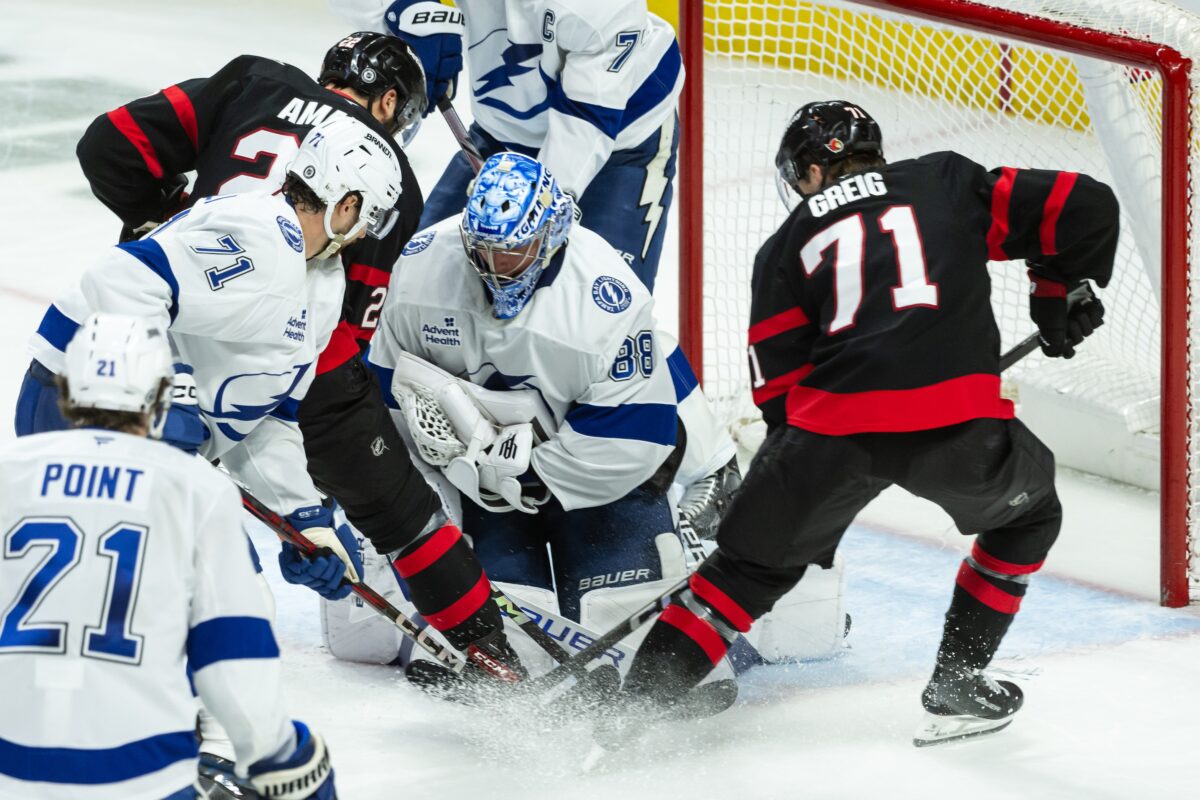
The NHL is approaching the end of its regular season, with teams trying for the remaining playoff spots. The competition is particularly fierce in both conferences. In the Eastern Conference, the Montreal Canadiens recently bolstered their playoff prospects with a 4-1 victory over the Boston Bruins, giving them a two-point lead over the New York Rangers for the final wild-card spot. Meanwhile, the Ottawa Senators strengthened their position by defeating the Tampa Bay Lightning 2-1, maintaining a five-point lead over the Canadiens.

Over in the Western Conference, the Winnipeg Jets matched their franchise record for single-season wins with a 4-0 triumph over the Vegas Golden Knights, solidifying their top spot in the Central Division. Conversely, the Anaheim Ducks were officially eliminated from playoff contention following a 4-1 loss to the Calgary Flames, who are still in the hunt for a wild-card berth. Let’s dive into the intense, high-stakes battle of the Stanley Cup Playoffs.

Number of Teams That Qualify for NHL Playoffs

Each NHL season, 16 teams qualify for the Stanley Cup Playoffs. This includes the top three teams from each of the four divisions, which are Atlantic, Metropolitan, Central, and Pacific, totaling 12 teams. The remaining four spots are filled by wild-card teams, which are the next two highest-placed teams in each conference, regardless of division. This structure ensures that the most competitive teams can compete for the championship.

Eastern Conference Standings

The Toronto Maple Leafs lead the Atlantic Division with a 46-25 record, closely followed by the Tampa Bay Lightning (44-26) and the Florida Panthers (44-27). The Ottawa Senators, with a 40-29 record, are in contention for a wild-card spot. In the Metropolitan Division, the Washington Capitals boast a leading 48-18 record, with the Carolina Hurricanes (46-24) and New Jersey Devils (40-29) securing the next two spots. The New York Rangers (36-32) and Columbus Blue Jackets (34-31) are also eyeing playoff positions.

Western Conference Standings

In the Western Conference’s Pacific Division, the Vegas Golden Knights top the standings with a 45-22 record, followed by the Los Angeles Kings (43-23) and the Edmonton Oilers (44-26). The Calgary Flames (36-27) and Vancouver Canucks (34-28) are in the mix for wild-card spots. The Central Division is led by the Winnipeg Jets, who have achieved a remarkable 52-20 record, with the Dallas Stars (50-21) and Colorado Avalanche (47-26) rounding out the top three. The St. Louis Blues (42-28) and Minnesota Wild (41-28) are also in contention for postseason berths.

NHL Playoffs Format

The NHL playoffs follow a structured format designed to determine the best team in the league through a series of elimination rounds. The format ensures competitive balance and high-stakes action as teams battle for the prestigious Stanley Cup.

So, let’s have a look at how it works:

Total Teams Involved
A total of 16 teams qualify for the Stanley Cup Playoffs, eight from the Eastern Conference and eight from the Western Conference. These teams are determined based on regular season standings and wild-card rankings.

Divisional Qualification
In each conference, the top three teams from both divisions (Atlantic and Metropolitan in the East, Central and Pacific in the West) automatically secure a playoff spot. Their placement is based on the total points they earn throughout the regular season.

Wildcard Spots
In addition to the six teams from each conference that qualify directly, two additional teams from each conference earn a wild card spot. These wild card teams are the two non-division winners with the highest point totals in their respective conferences.

Stanley Cup Final
The Eastern and Western Conference champions face each other in the showdown, with the first team to win four games crowned as the Stanley Cup champion.

Also Read: NHL Playoff Clinching Scenarios: Who’s In & Who’s Still Fighting?

Seeding and Matchups:

The NHL follows a structured seeding system to ensure a competitive balance, with teams earning their positions based on points accumulated during the season. The top three teams from each of the two divisions within a conference automatically qualify for the playoffs. These teams are ranked based on their total points, with the division leader earning the highest seed in its bracket.

The next two best teams in each conference, regardless of division, earn wild-card spots. These teams are ranked based on their total points, with the division leader earning the highest seed in its bracket.

How Seeding Determines Matchups

Once the teams are ranked, the matchups are set as follows:

  • The 1st seed (best team in the conference) plays the lower-ranked wild-card team (8th seed).
  • The 2nd seed (other division leader) faces the higher-ranked wild-card team (7th seed).
  • The 3rd and 4th seeds (the second and third-place teams from each division) face each other within their division.

Series Format:

  • Best-of-Seven: Each playoff series is a best-of-seven format, where the first team to win four games advances to the next round.
  • Home-Ice Advantage: The team with the higher seed hosts games 1, 2, 5, and 7, while the lower seed hosts games 3, 4, and 6. This follows a 2-2-1-1-1 home-and-away schedule.

Progression:

  1. First Round (Division Semifinals): 16 teams compete in eight matchups based on the seeding and matchup criteria.​
  2. Second Round (Division Finals): The eight winners from the first round advance to compete within their respective divisions.​
  3. Conference Finals: The four remaining teams, two from each conference, compete to determine the Eastern and Western Conference champions.​
  4. Stanley Cup Final: The Eastern and Western Conference champions face off in the final series to compete for the Stanley Cup.

How Many Wild Card Teams Make the NHL Playoffs?

The NHL playoffs include four wild-card teams, two from each conference. These teams secure their spots based on their regular-season performance, specifically their point totals, rather than their divisional rankings. This means that even if a team doesn’t finish in the top three of its division, it can still qualify for the postseason if it has a higher point total than other non-playoff teams in the conference.

This wild-card system was introduced to ensure a fair and competitive playoff structure, allowing strong teams from stacked divisions to earn a spot and to have a fair chance, even if they didn’t finish among the divisional leaders. The two wild-card teams in each conference are the ones with the highest points among all teams that didn’t secure an automatic divisional qualification. They are then seeded against the top teams in their respective conferences.

In the first round, the wild-card teams face the division winners. The highest-seeded division winner plays the lower-seeded wild card, while the other division winner plays the higher-seeded wild card. This format creates intense matchups right from the start, with underdog teams often challenging top-seeded teams in thrilling series.

Image Credit: Marc DesRosiers-Imagn Images

nhl nhl

I’ve always loved writing and storytelling, and hockey gives me a perfect stage for endless stories to tell. Whether it’s breaking down a game, analyzing a big trade, or capturing the emotions on the ice, I bring the NHL to life through words. So what’s the best part you ask? Watching the action unfold and turning it into something fans can connect with. To my readers: Hockey is more than just a game—it’s the highs, the heartbreaks, and the moments that make us jump off our seats. So, keep cheering, keep debating, and never stop loving the madness of the sport!

Read more