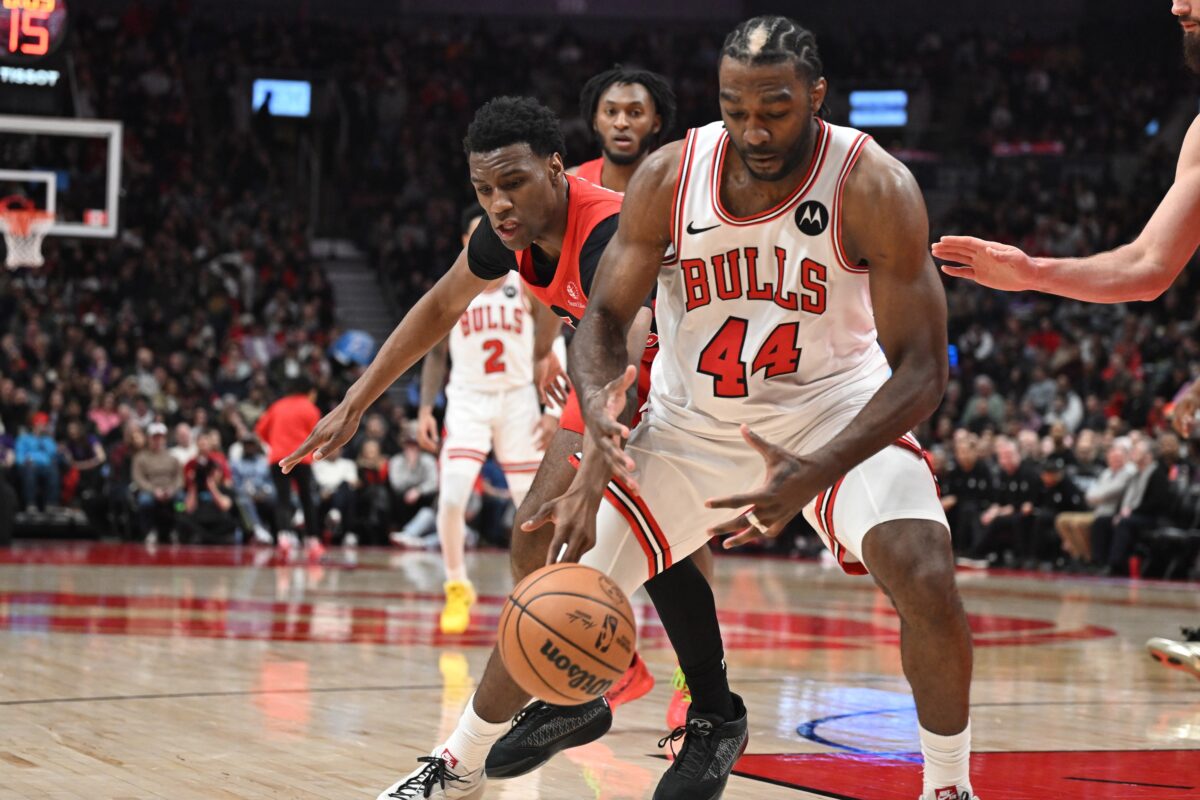
At the All‑Star break, the Chicago Bulls find themselves in a precarious position. With a 24–31 record and an 11th‑place standing in the Eastern Conference, their postseason hopes are slim. The implied odds place them at just 2.78% to make the playoffs (+3500), while their NBA Finals odds sit at a staggering +250000, or 0.04% chance.
Despite reaching the Play‑In Tournament for the third consecutive season, they once again fell to the Miami Heat during last season, underscoring their inability to break through. The Bulls’ chaotic roster turnover and deadline trades highlight a franchise searching for stability amid fading playoff dreams.
| Metric | Value |
|---|---|
| Record | 24–31 |
| Conference Rank | 11th |
| Net Rating | -3.8 |
| Points Per Game | 116.8 |
| Opponent PPG | 120.6 |
| Differential | -3.8 |
| Streak | L6 |
| Last 10 | 1–9 |
The Bulls’ metrics reveal a team struggling to maintain competitiveness. Their 24–31 record places them outside the top 10 in the East, with a negative net rating of -3.8 reflecting defensive shortcomings. Scoring 116.8 points per game is respectable, but conceding 120.6 points per game highlights systemic defensive issues.
The -3.8 differential is unsustainable for playoff contention. Their current six‑game losing streak and 1–9 record in the last 10 games emphasize a collapse in form. Sitting 11th, they remain mathematically alive for the Play‑In, but the numbers suggest a team trending downward rather than upward.
The Bulls’ playoff odds are bleak. At +3500, their implied probability of making the postseason is just 2.78%, reflecting market skepticism about their ability to climb the standings. Their NBA Finals odds of +250000 (0.04%) are effectively symbolic, underscoring the lack of confidence in their roster’s ability to contend.
Line movement has been stagnant, with no significant improvement even after their flurry of deadline trades. This signals that bookmakers view their additions – Jaden Ivey, Rob Dillingham, Anfernee Simons, Collin Sexton, as lateral rather than transformative.
Market confidence remains low, suggesting that Chicago’s path to the playoffs is more about lottery positioning than legitimate contention. The odds encapsulate the reality: while technically alive, the Bulls are seen as long shots, with their postseason hopes fading fast.
The Bulls face a daunting schedule in the final stretch. With a heavy road split (9–19 away record compared to 15–12 at home), their inability to win outside Chicago is a glaring weakness. The remaining slate includes multiple back‑to‑backs, further testing a roster already destabilized by injuries and turnover.
Strength of schedule metrics place them in the middle‑to‑upper tier of difficulty, with key opponents including the Heat, Hornets, Hawks, and Nets- all direct competitors in the Play‑In race. Facing teams like the Pistons and Thunder only compounds the challenge.
The Bulls’ lack of cohesion, combined with a demanding schedule, makes climbing into the top 10 unlikely. Their home form offers some hope, but the road-heavy nature of the remaining games is a significant obstacle. Schedule difficulty reinforces the odds: Chicago’s path is uphill, and every loss tightens the noose around their playoff aspirations.
The Bulls’ statistical profile explains their struggles. Offensively, they average 116.8 points per game, a respectable figure that keeps them competitive in shootouts. However, their defensive rating is poor, allowing 120.6 points per game, which ranks among the worst in the conference.
The -3.8 net rating is a clear indicator of imbalance. Clutch performance has been lacking, with repeated failures against the Heat in Play‑In scenarios underscoring their inability to execute late. Over the last 10 games, their 1–9 record highlights a collapse in form, with defensive lapses and inconsistent rotations.
Trends show that despite offensive flashes from new additions, the lack of defensive identity undermines progress. These stats collectively define their playoff chances: strong enough to score, but too porous to win consistently. Without defensive improvement, their statistical foundation points toward another Play‑In exit, or missing the Play‑In entirely.
Several players could swing the Bulls’ fortunes, though the margin is slim.
Jaden Ivey, acquired at the deadline, brings athleticism and scoring punch. Averaging double‑digit points since joining, his ability to penetrate defenses adds a new dimension. However, his on/off metrics show defensive liabilities, meaning his impact is limited unless paired with strong defenders.
Anfernee Simons offers perimeter shooting and playmaking. His averages suggest he can stretch defenses, but inconsistency has plagued him. If Simons finds rhythm, he could provide the spark Chicago desperately needs.
Collin Sexton adds energy and scoring bursts. His aggressive style can change momentum, but his efficiency fluctuates. Sexton’s health and consistency will determine whether he is a stabilizer or liability.
Rob Dillingham, though young, has shown flashes of creativity. His minutes are experimental, but his development could be a silver lining in a lost season.
Collectively, these players represent Chicago’s gamble: high‑variance contributors who could either elevate the team or reinforce instability. Their form and integration will dictate whether the Bulls can mount a late surge or continue their slide.
The Bulls’ biggest threats come from direct Play‑In rivals. The Miami Heat (29–27) sit comfortably ahead, with a balanced profile and playoff experience. The Charlotte Hornets (26–29), riding a 9-1 stretch in their last 10 games, are surging at the right time, making them a formidable competitor.
The Atlanta Hawks (26–30) remain inconsistent but still hold a slight edge over Chicago. Each of these teams has momentum or stability that the Bulls lack. The Heat’s playoff pedigree, the Hornets’ hot streak, and the Hawks’ balanced scoring all pose obstacles.
Chicago’s six‑game losing streak contrasts sharply with these rivals’ form, making it difficult to envision overtaking them. The standings race is unforgiving, and the Bulls’ inability to string together wins leaves them vulnerable. Rivals’ upward trajectories highlight the gap between Chicago’s aspirations and reality, reinforcing their slim playoff odds.
Based on odds, metrics, and schedule, the prediction is clear: the Bulls are unlikely to make the playoffs. Their 2.78% implied probability reflects market consensus, while their 0.04% Finals chance is effectively negligible.
Statistically, their negative differential, poor defensive rating, and six‑game losing streak point toward continued decline. Rivals like the Heat, Hornets, and Hawks are trending upward, further diminishing Chicago’s chances.
While new additions provide intrigue, they are not transformative enough to overcome systemic issues. The Bulls are projected to finish outside the Play‑In, with lottery positioning becoming the more realistic outcome. Prediction: Chicago will miss the postseason, marking their fourth consecutive Play‑In failure or absence.
Their trajectory suggests another offseason of upheaval, with roster instability and front office decisions defining the franchise more than playoff success. The numbers and context align: this is not a playoff team, but one headed toward another reset.
nba
nfl
wnba We use cookies for ads and to improve your experience. By continuing on the site, you agree to our Privacy Policy. Read more about it
NBA